METICO MALL
Scope
Architecture & Planning
Year
2025
Type
Commercial
Size
25,000 m²
Status
Concept
Location
Amman , Jordan
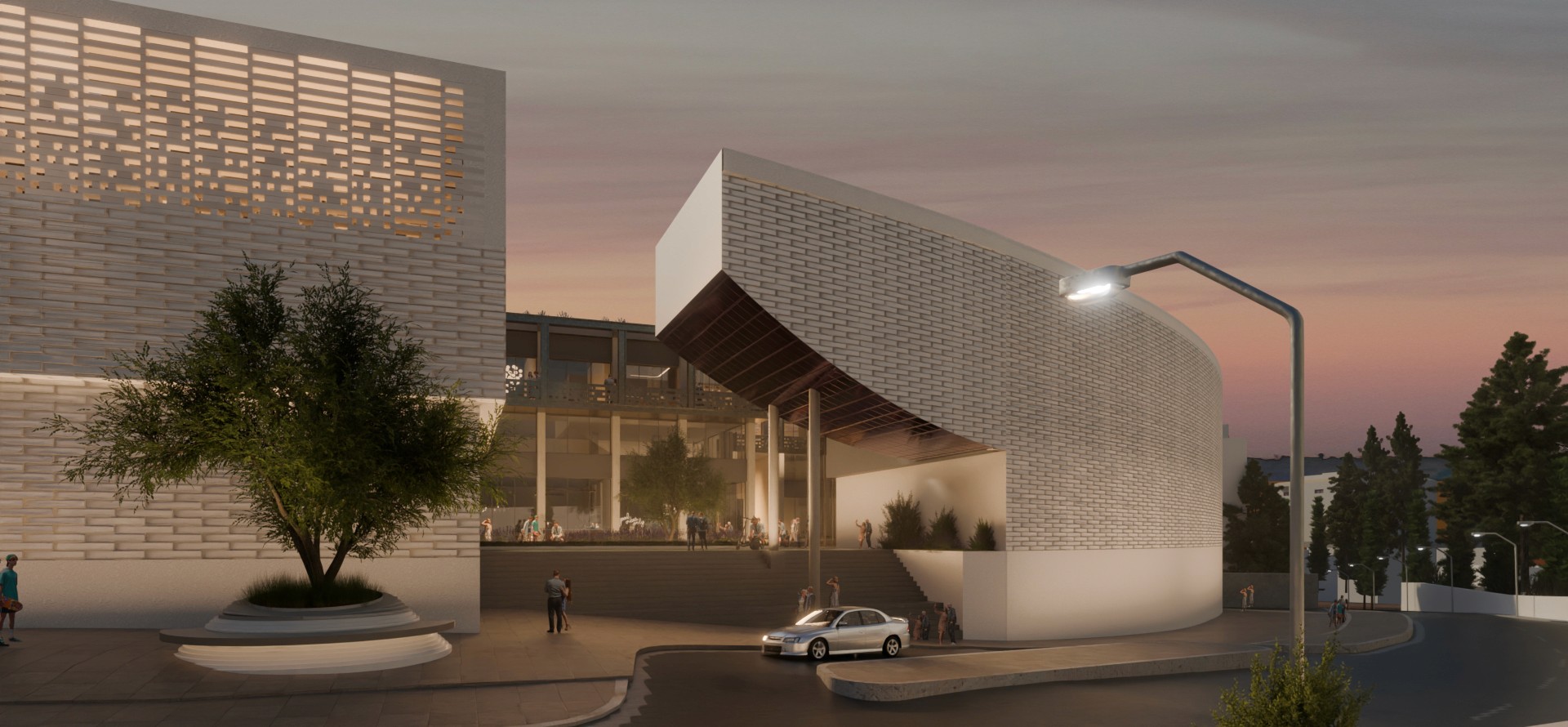
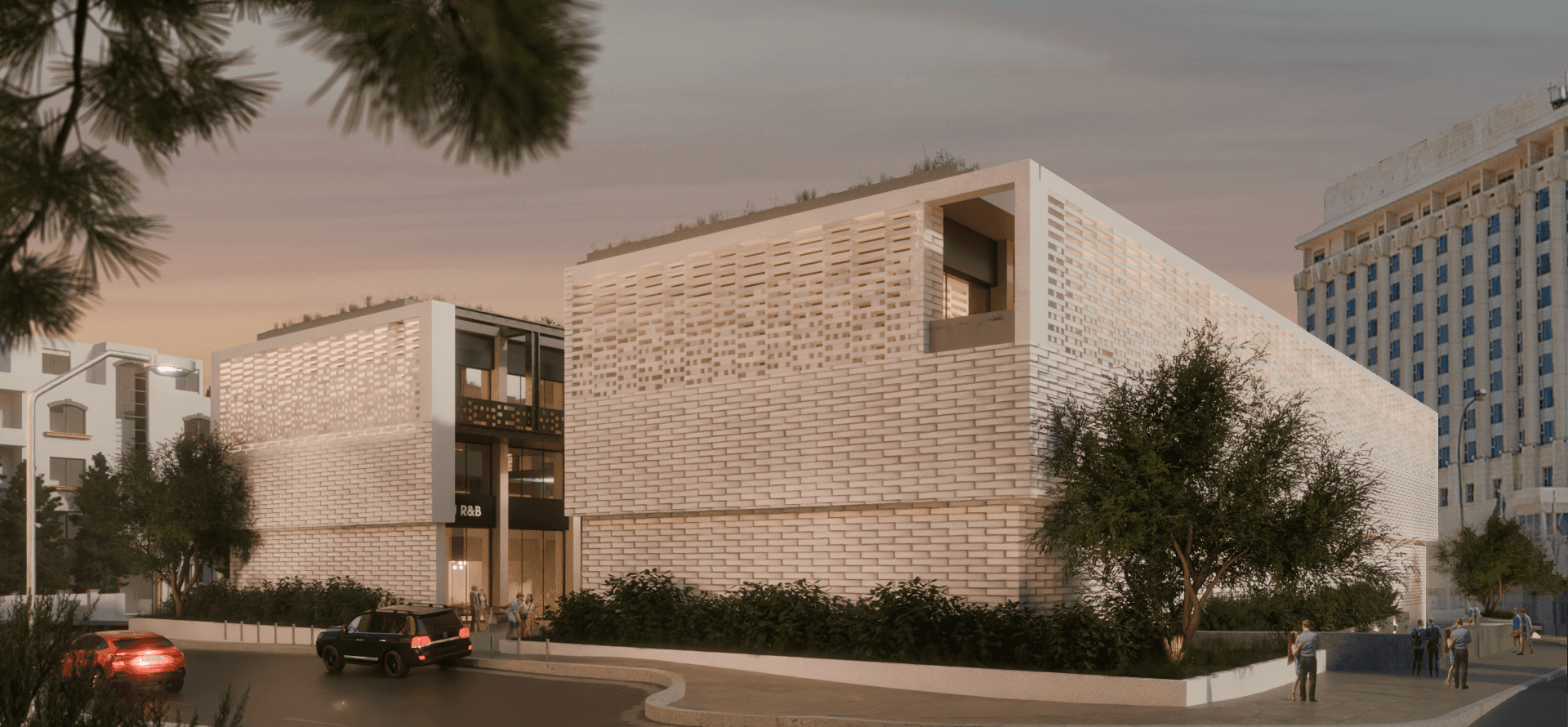
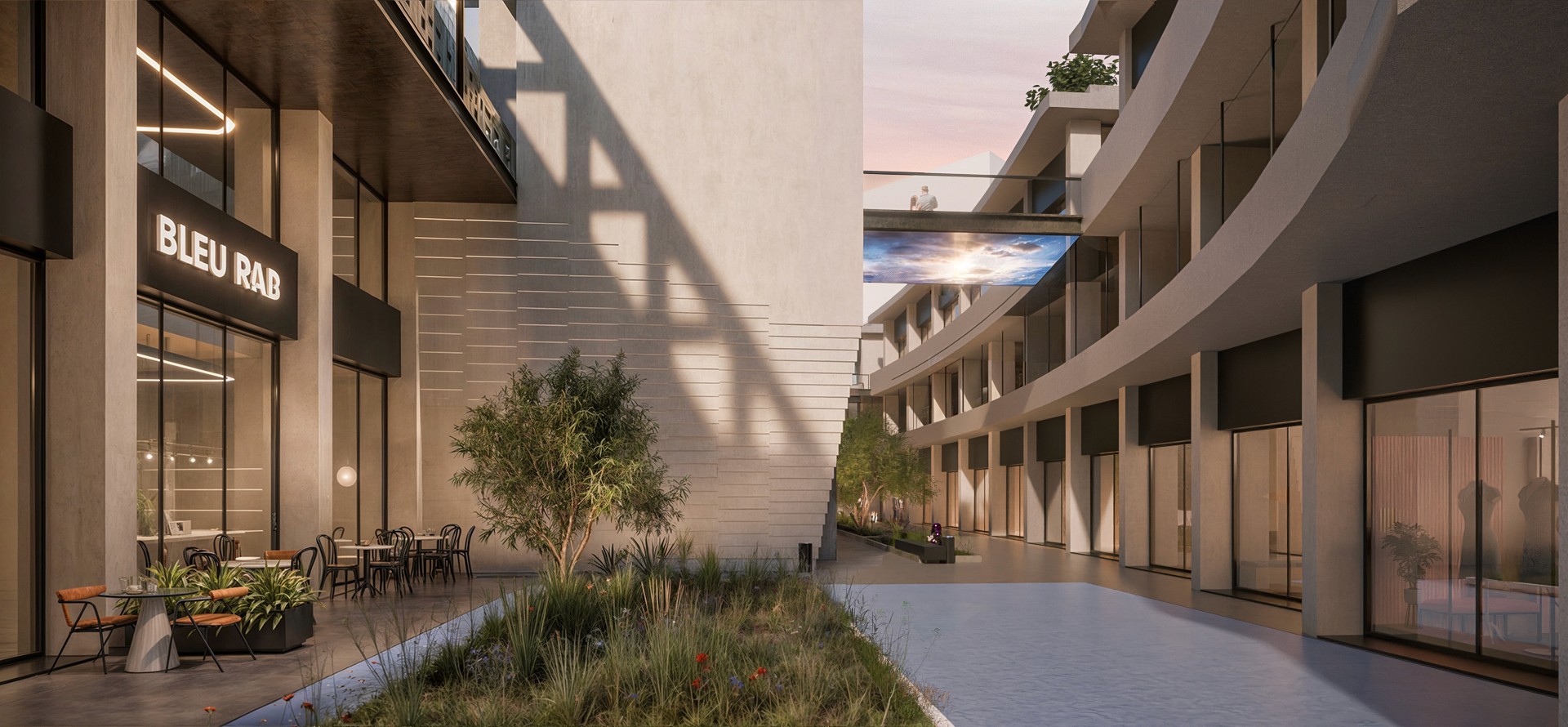
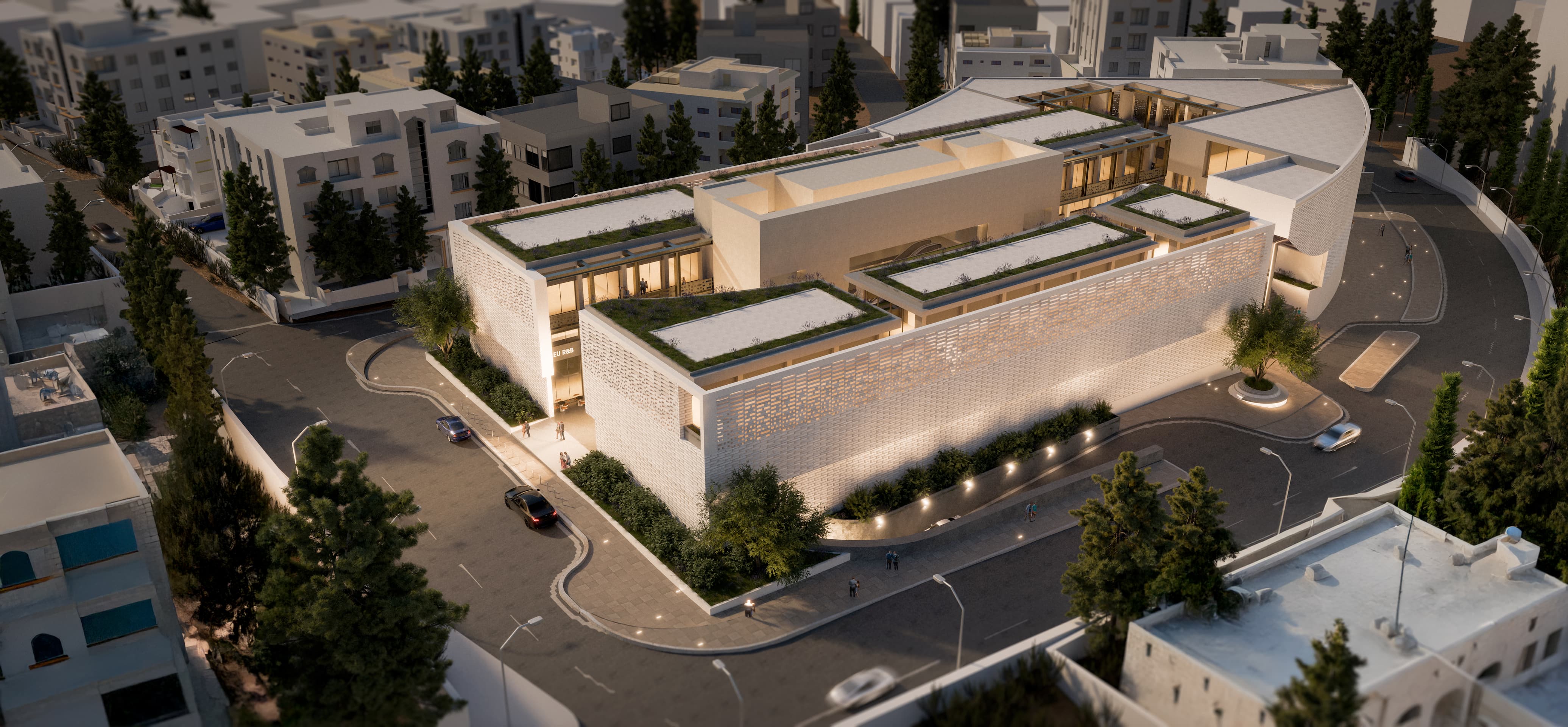
The project is rooted in the reinterpretation of courtyard typology, exploring interiority and sequential spatial experience as central design principles. Four distinct courtyards, the entry gateway, circulation hub, water-feature space, and food court, organize the mall, offering layered experiences that balance communal interaction, moments of privacy, and visual connection to nature. This layering mediates between public and private realms, integrating greenery, water, and outdoor seating to create a dynamic and coherent spatial sequence.
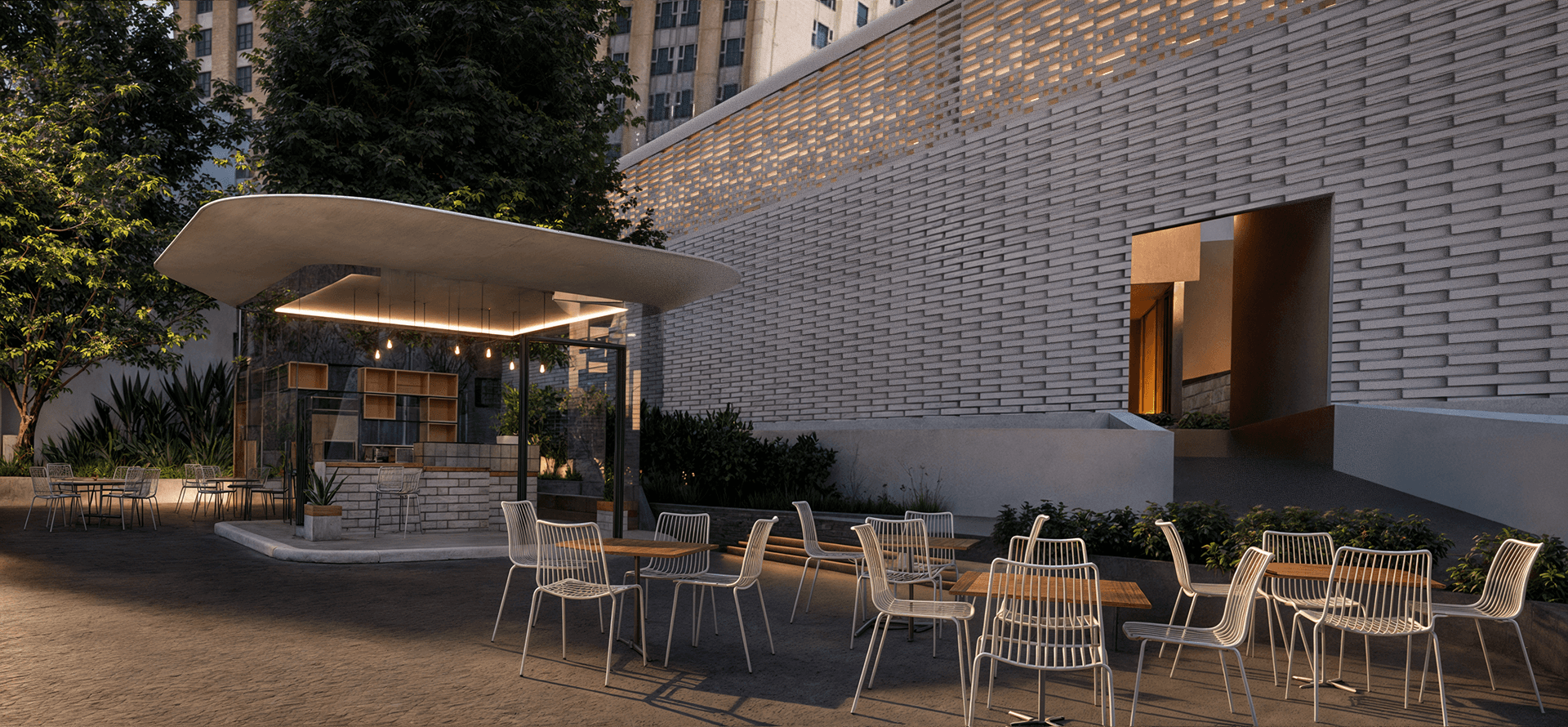
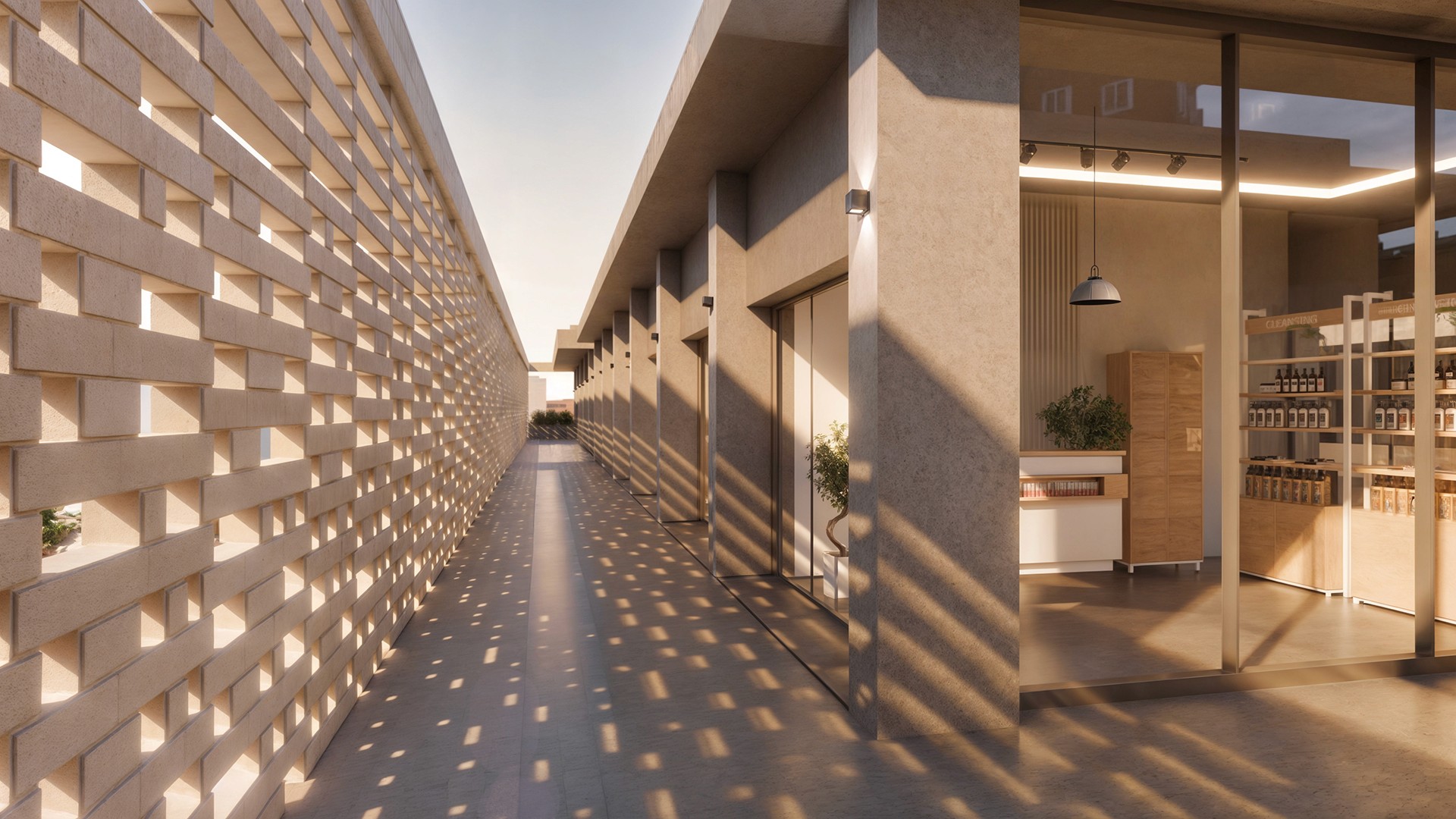
Materiality reinforces this conceptual layering. A contextual white stone exterior mediates the building’s scale and responds to the urban fabric, while an industrial core of raw concrete, steel, and glass defines the interior courtyards and circulation spaces. The irregular stone façade animates light and shadow, providing shading and privacy, while concrete floors and steel elements emphasize structural clarity and a timeless aesthetic. Glass allows visual continuity between interior and exterior, visually integrating green spaces and fostering interaction with natural light.
The design employs a subtractive process, carving the monolithic building mass to reveal interconnected courtyards, circulation pathways, and visual corridors. Upper-level stone screens filter light and create semi-private experiences, while perpendicular carving and bridging of volumes generate continuity and layered spatial interactions.
Site and functional considerations are integrated efficiently: a 3,400 sqm footprint on a 7,551 sqm plot, expanded vertically to reach 21,000 sqm including two basement parking levels, accommodates circulation, dining, retail, entertainment, and service areas. Programmatically, the mall prioritizes F&B (50% of GFA), with retail (15%), entertainment (7%), and administrative/support functions strategically positioned.
By combining a rigorous conceptual framework, material duality, environmental responsiveness, and a sculptural subtractive approach, the design transforms the mall into a layered urban interior that harmonizes circulation, light, landscape, and human experience within its contextual and functional parameters.
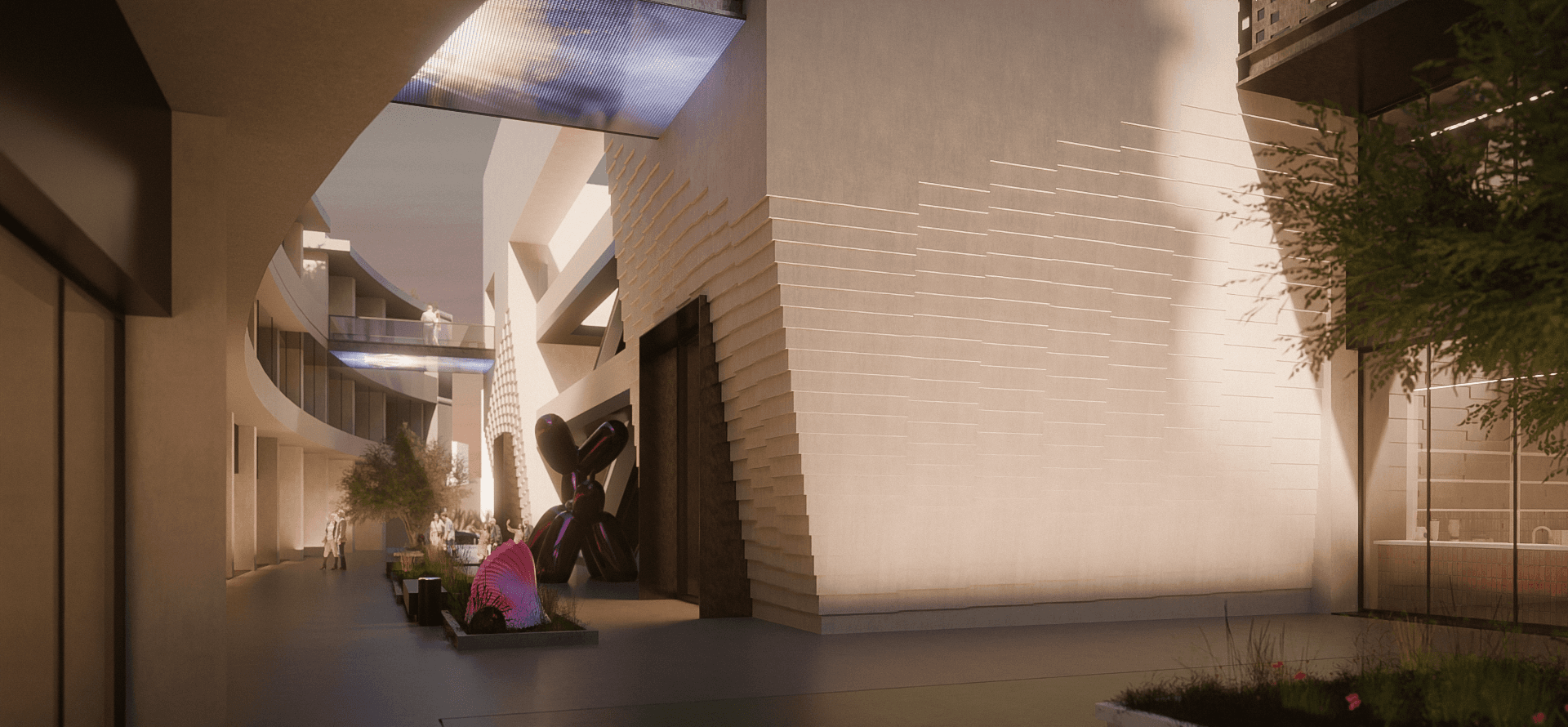
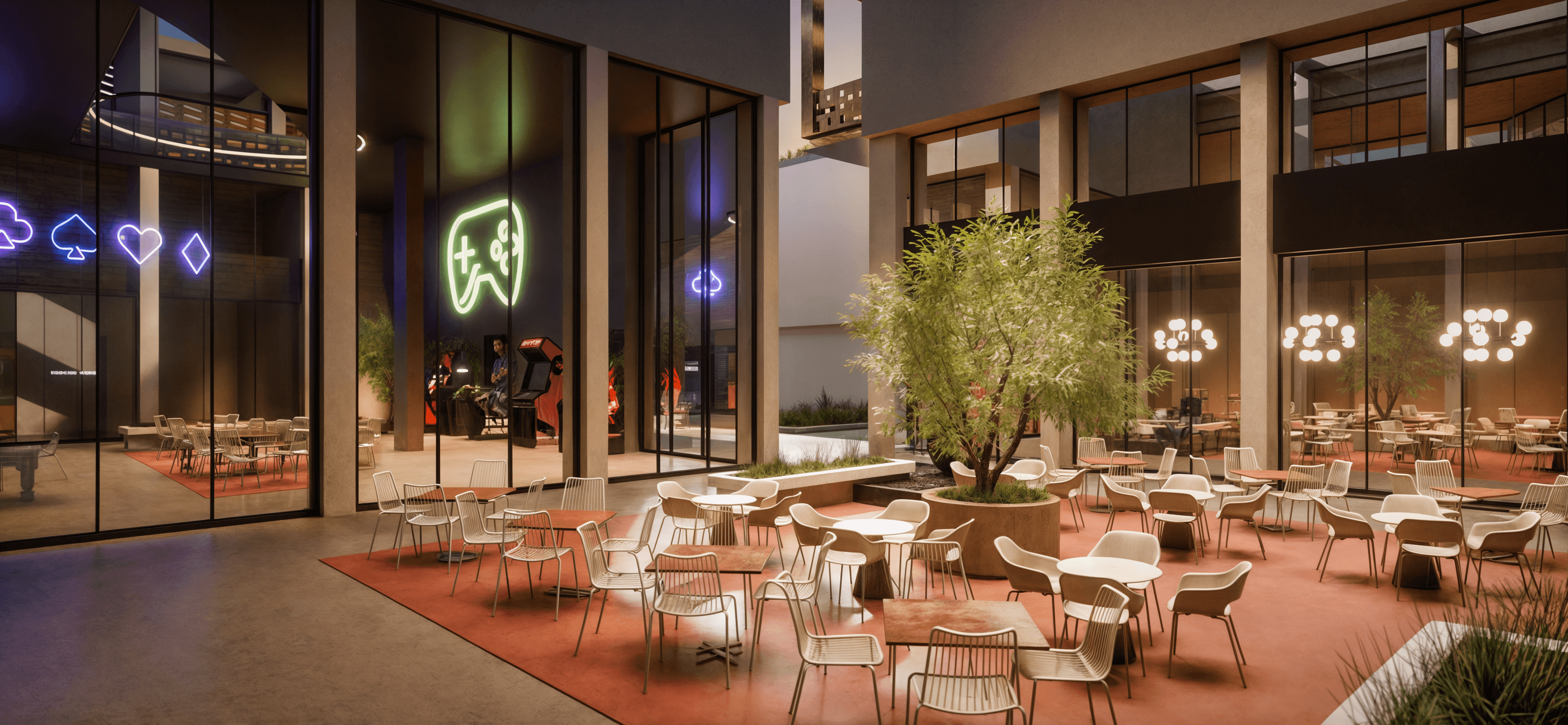
The project is rooted in the reinterpretation of courtyard typology, exploring interiority and sequential spatial experience as central design principles. Four distinct courtyards, the entry gateway, circulation hub, water-feature space, and food court, organize the mall, offering layered experiences that balance communal interaction, moments of privacy, and visual connection to nature. This layering mediates between public and private realms, integrating greenery, water, and outdoor seating to create a dynamic and coherent spatial sequence.
Materiality reinforces this conceptual layering. A contextual white stone exterior mediates the building’s scale and responds to the urban fabric, while an industrial core of raw concrete, steel, and glass defines the interior courtyards and circulation spaces. The irregular stone façade animates light and shadow, providing shading and privacy, while concrete floors and steel elements emphasize structural clarity and a timeless aesthetic. Glass allows visual continuity between interior and exterior, visually integrating green spaces and fostering interaction with natural light.
The design employs a subtractive process, carving the monolithic building mass to reveal interconnected courtyards, circulation pathways, and visual corridors. Upper-level stone screens filter light and create semi-private experiences, while perpendicular carving and bridging of volumes generate continuity and layered spatial interactions.
Site and functional considerations are integrated efficiently: a 3,400 sqm footprint on a 7,551 sqm plot, expanded vertically to reach 21,000 sqm including two basement parking levels, accommodates circulation, dining, retail, entertainment, and service areas. Programmatically, the mall prioritizes F&B (50% of GFA), with retail (15%), entertainment (7%), and administrative/support functions strategically positioned.
By combining a rigorous conceptual framework, material duality, environmental responsiveness, and a sculptural subtractive approach, the design transforms the mall into a layered urban interior that harmonizes circulation, light, landscape, and human experience within its contextual and functional parameters.
(Other works)