SEEDS OF HOPE SPECIAL LEARNING CENTER (AUTISM & LEARNING DIFFICULTY)
Scope
Interior Architecture
Year
2024
Type
Institutional
Size
2,300 m2
Status
Completed
Location
Amman, Jordan
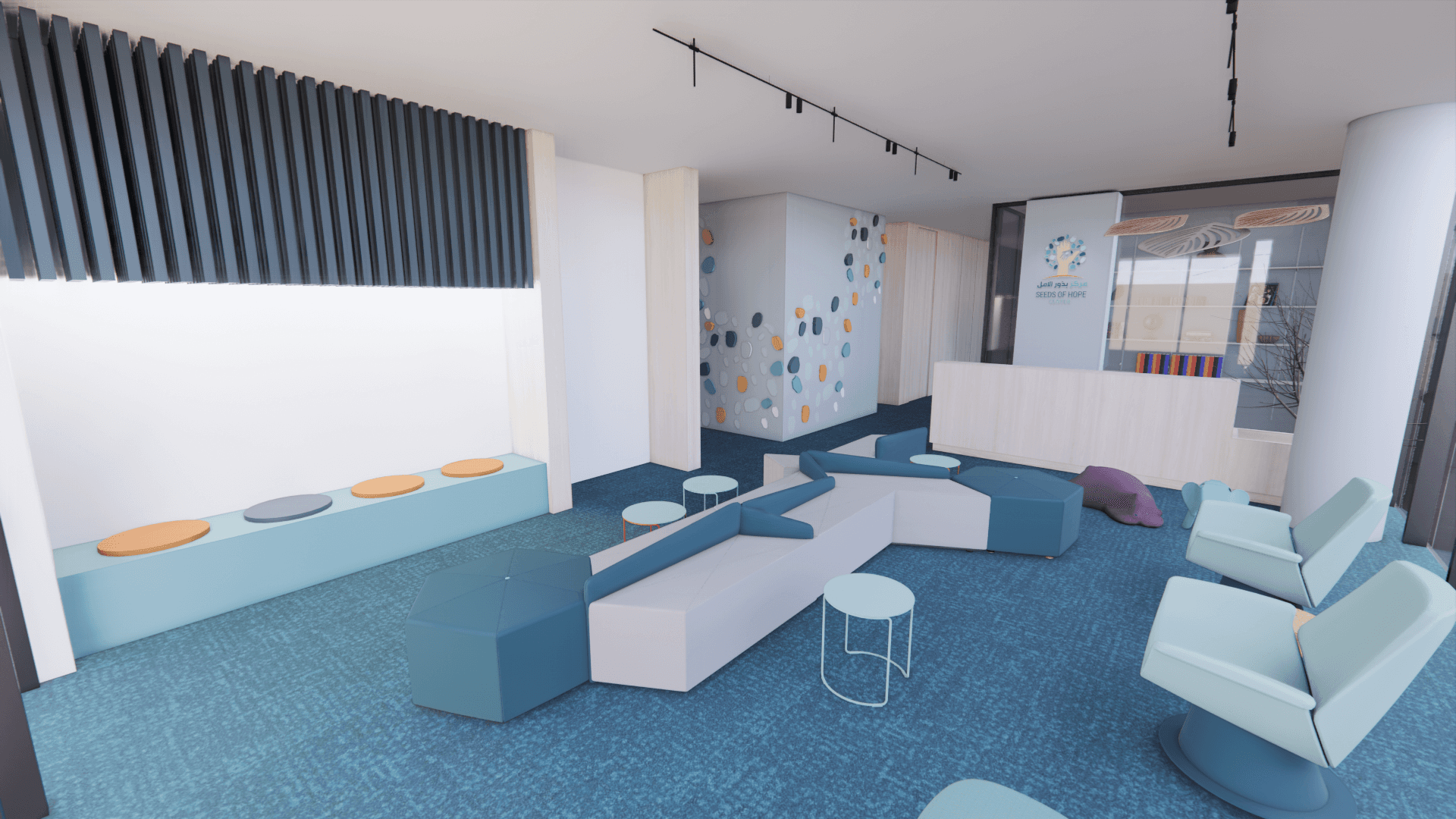
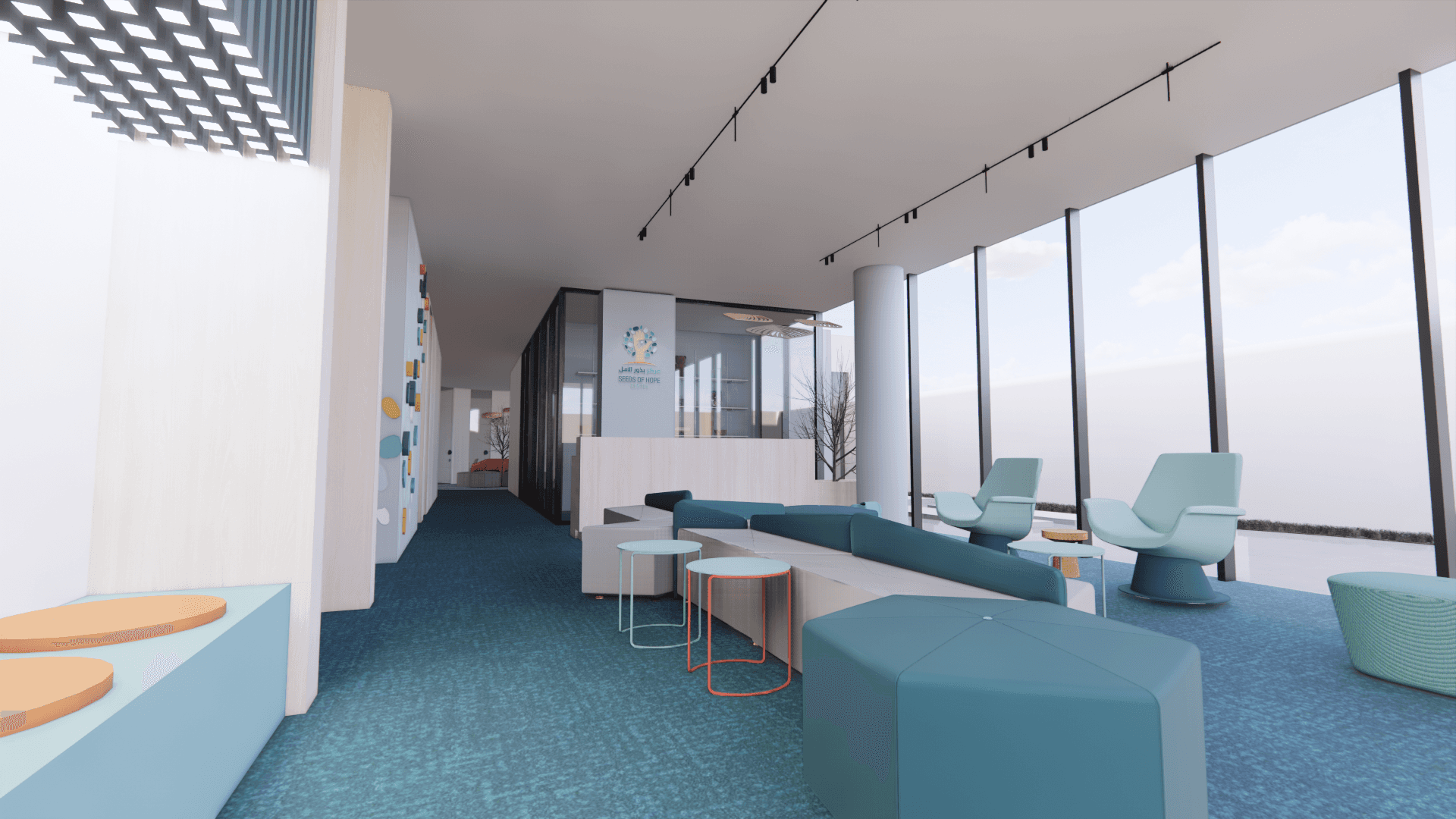
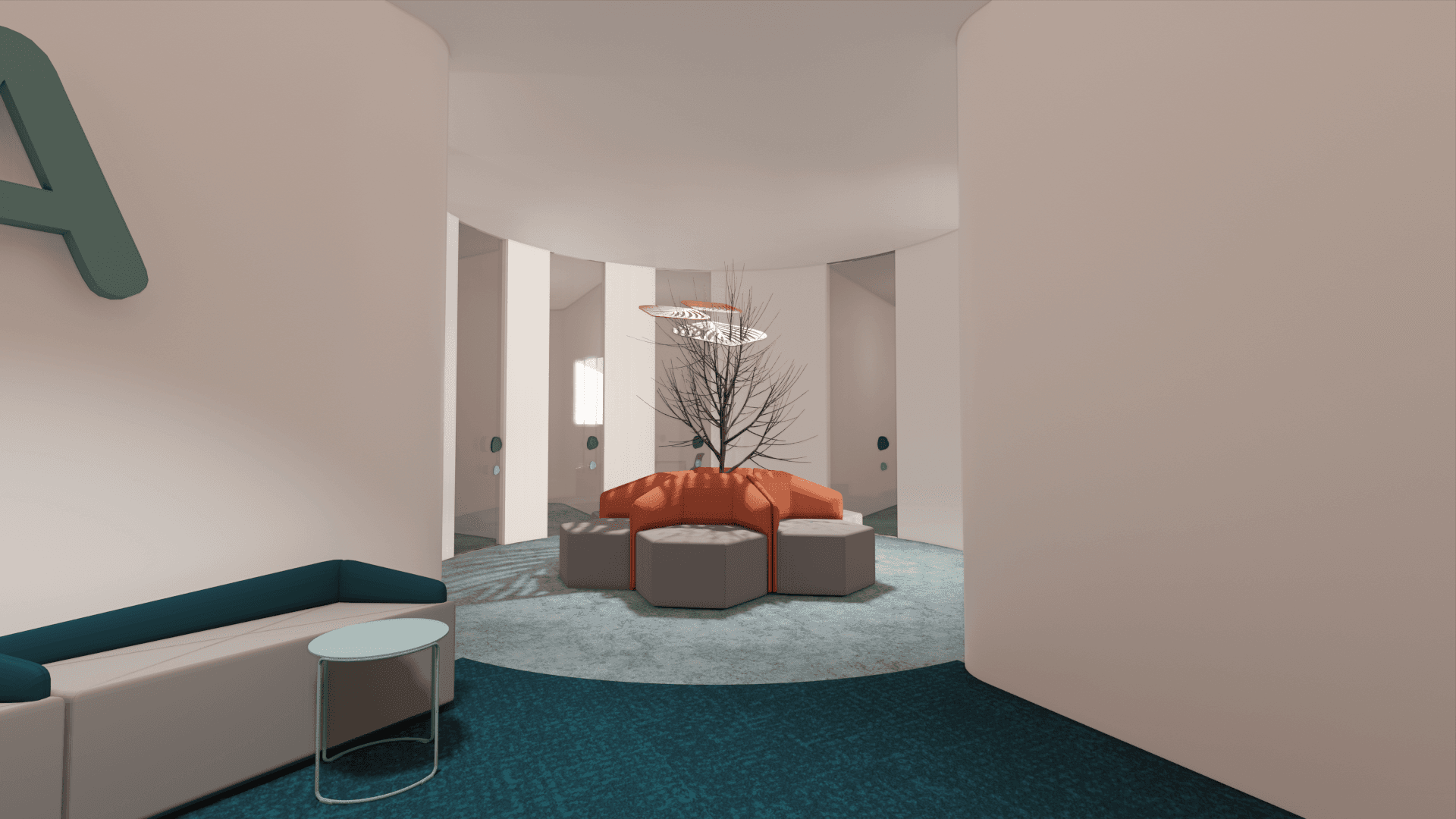
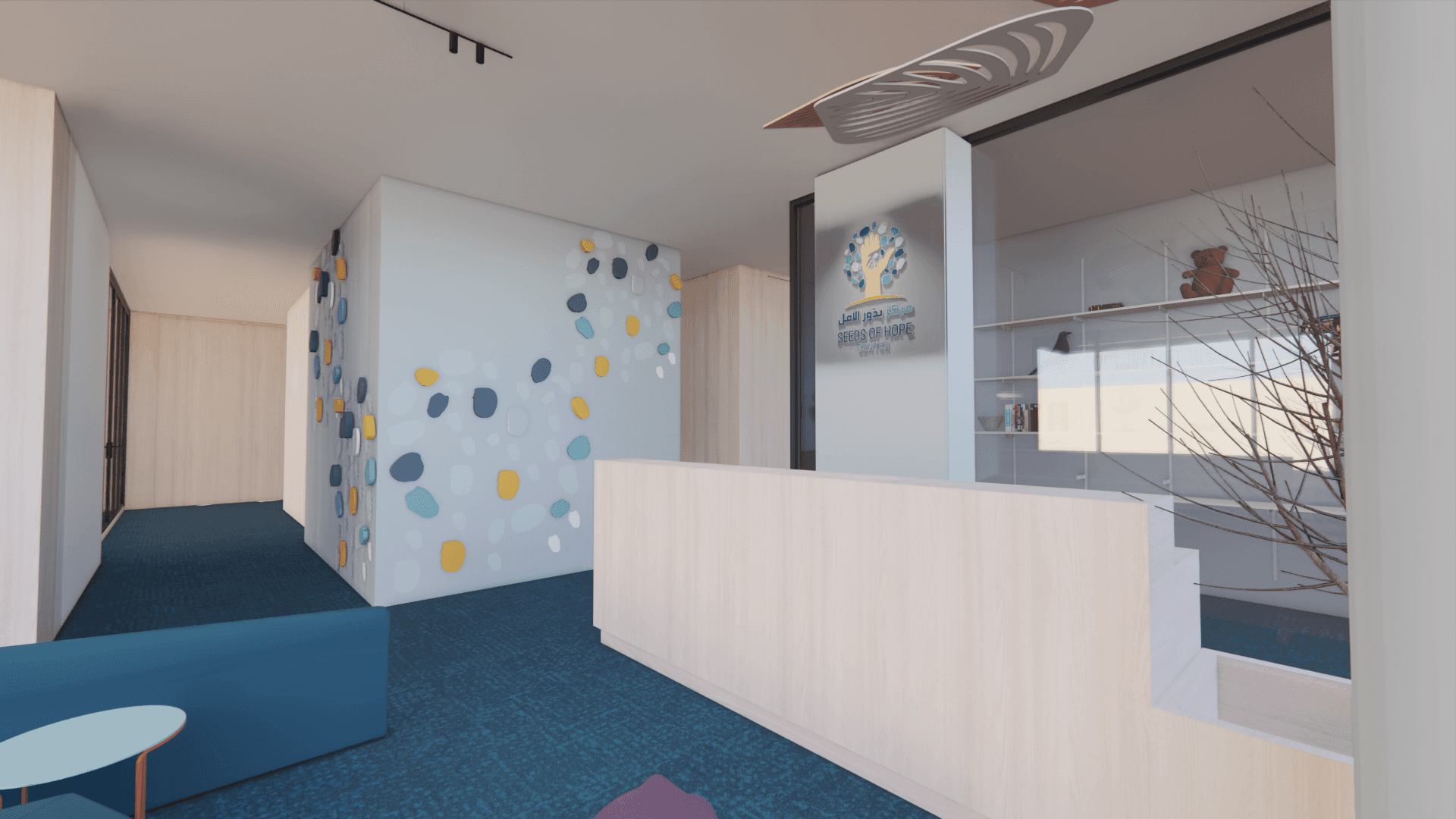
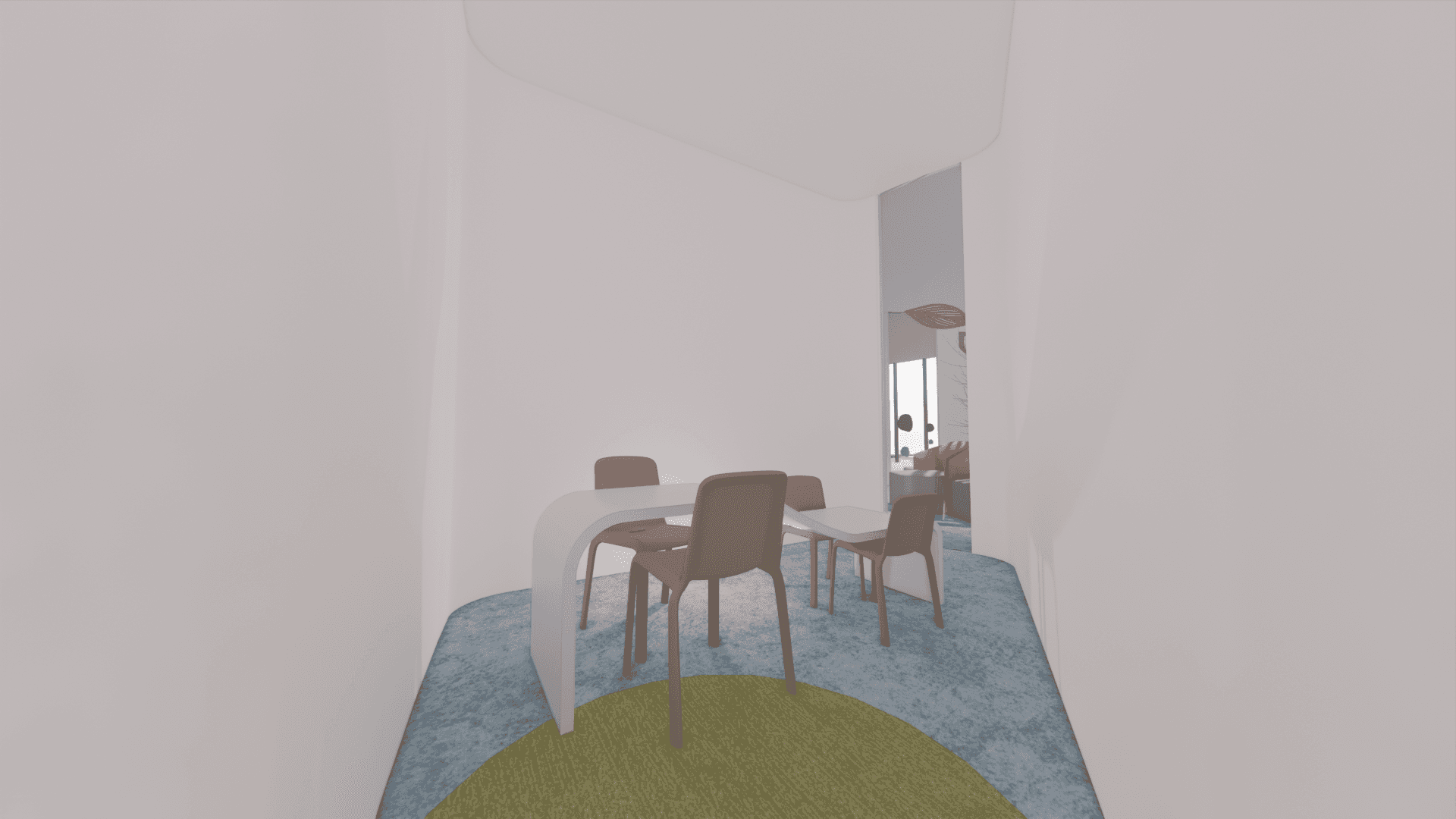
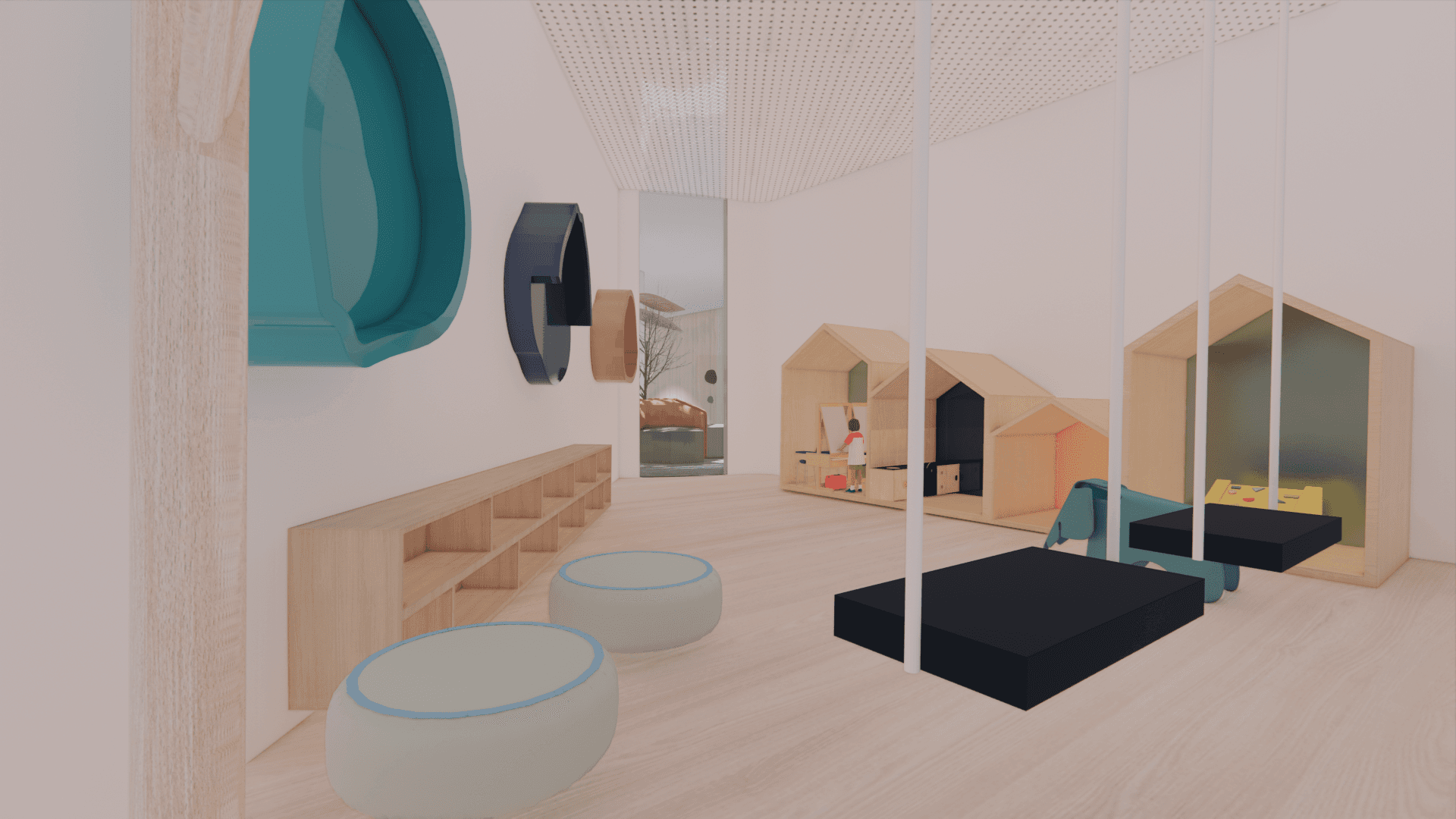
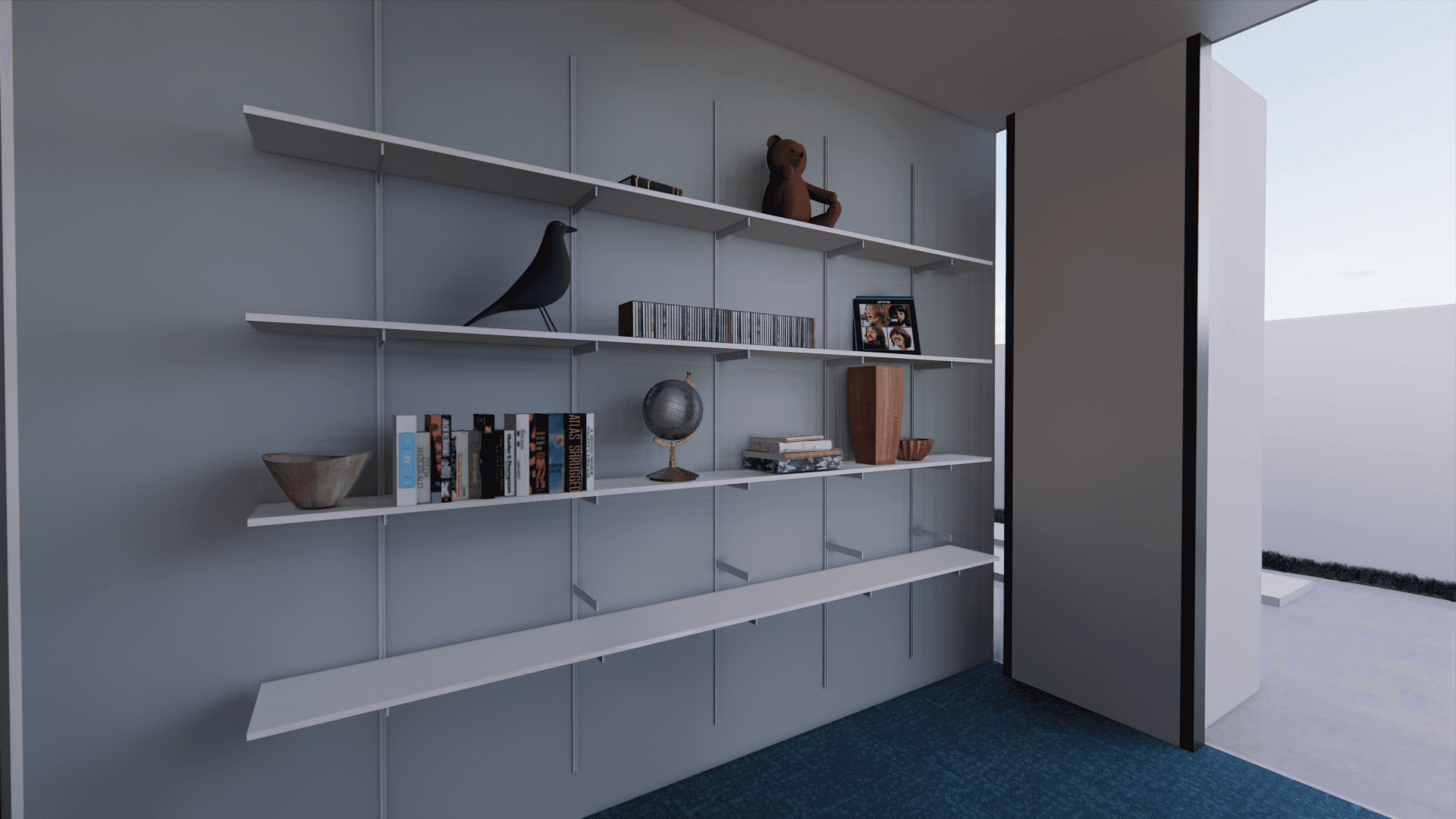
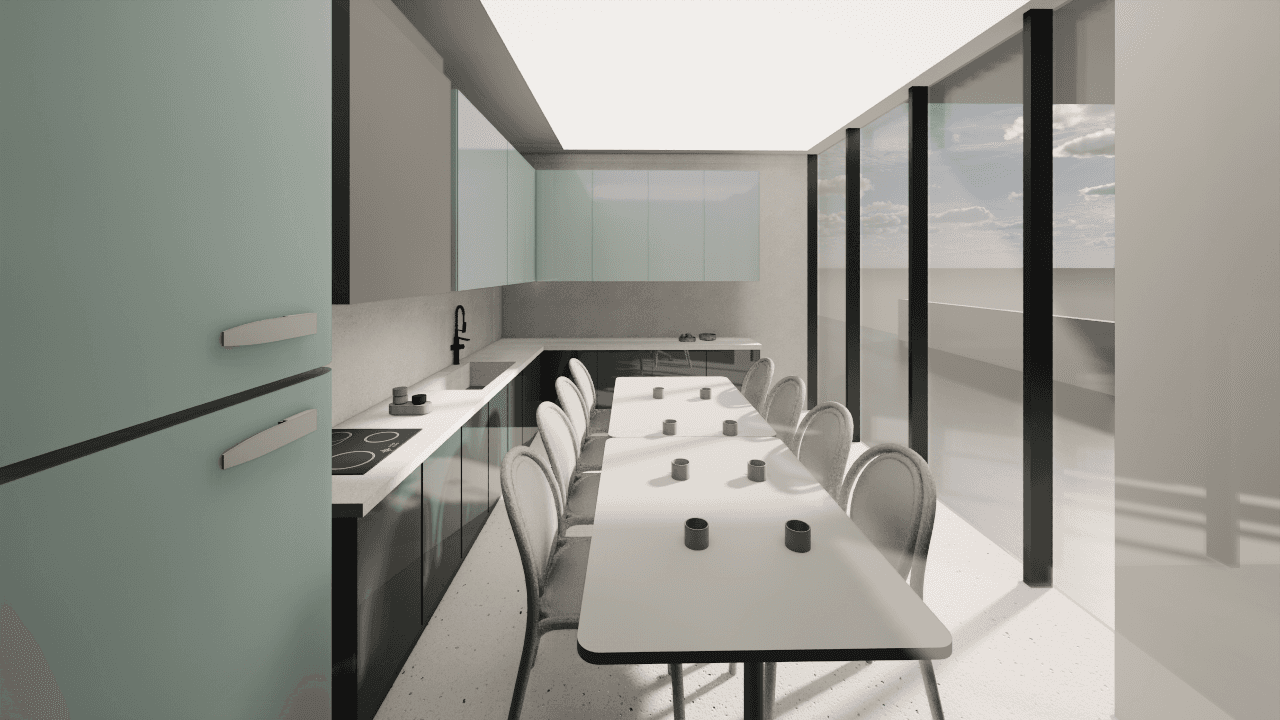
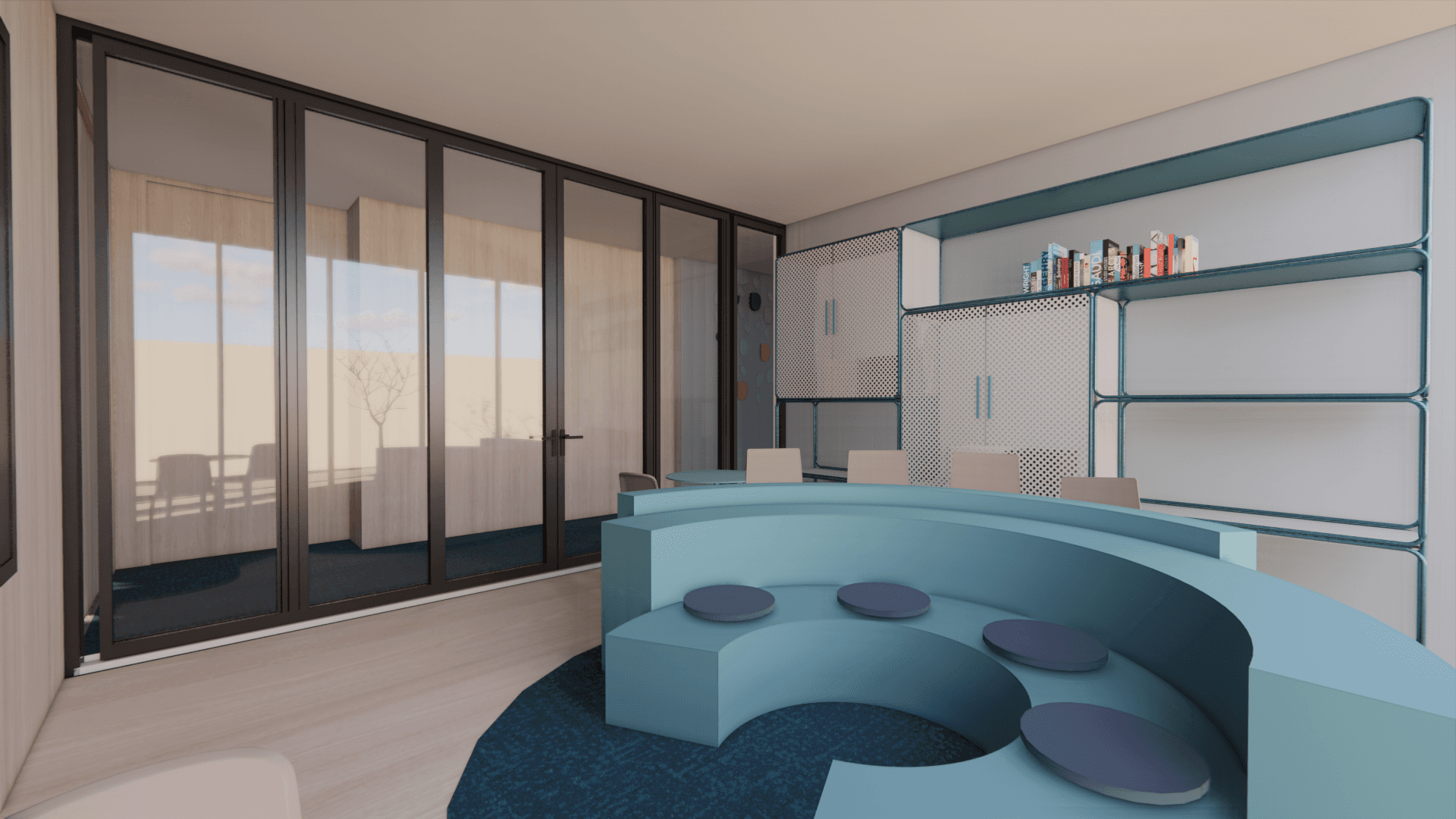
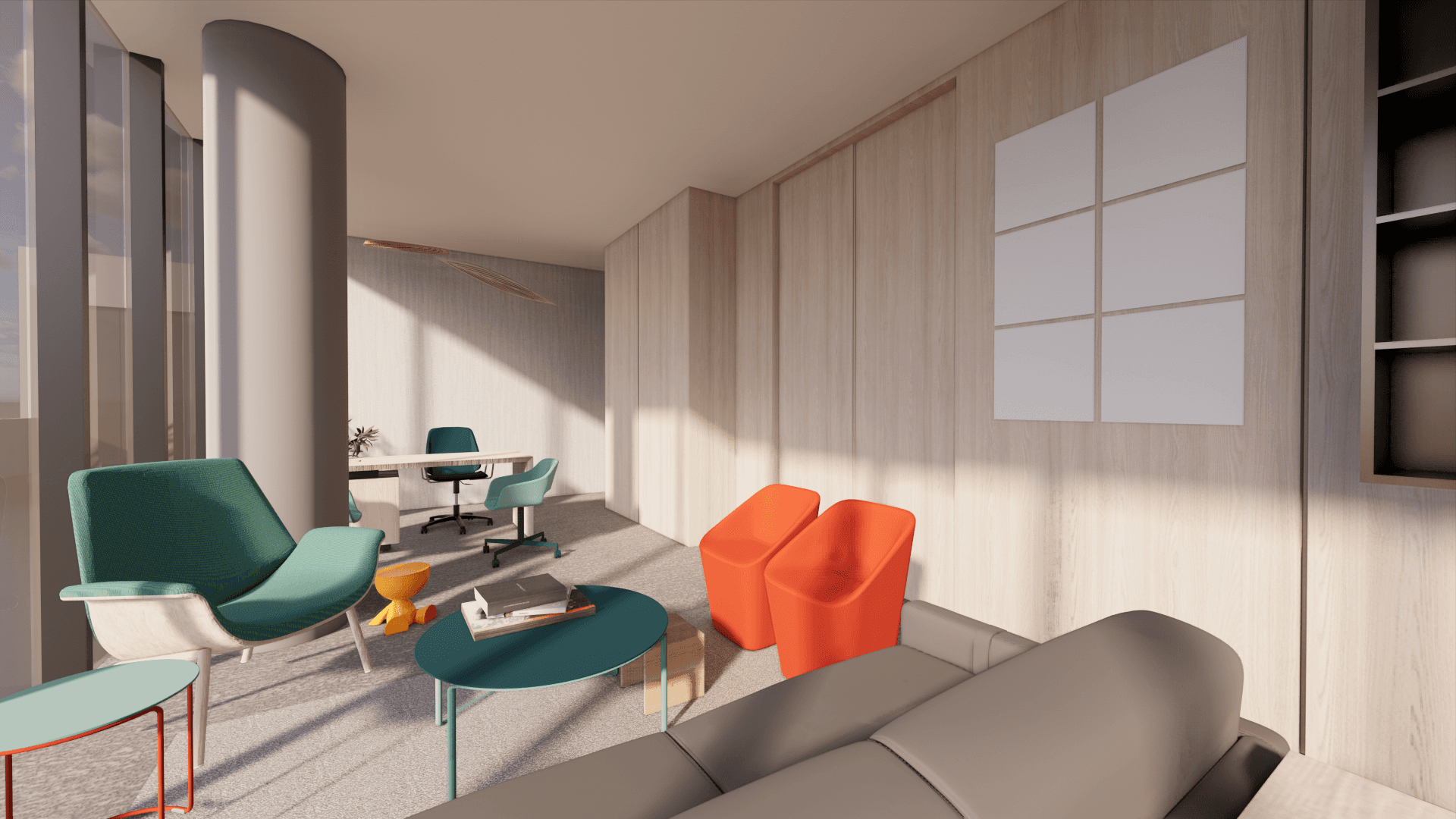
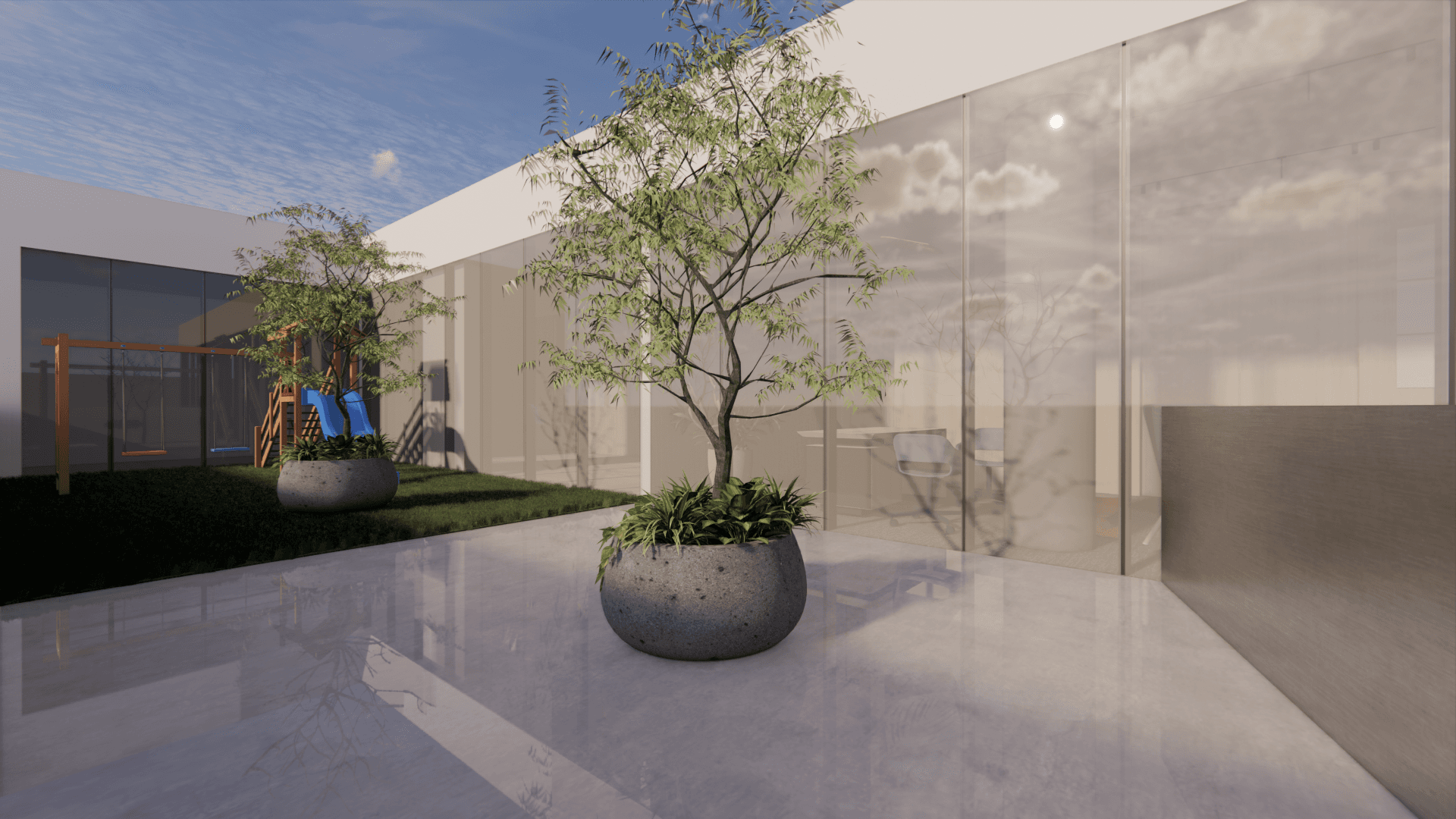
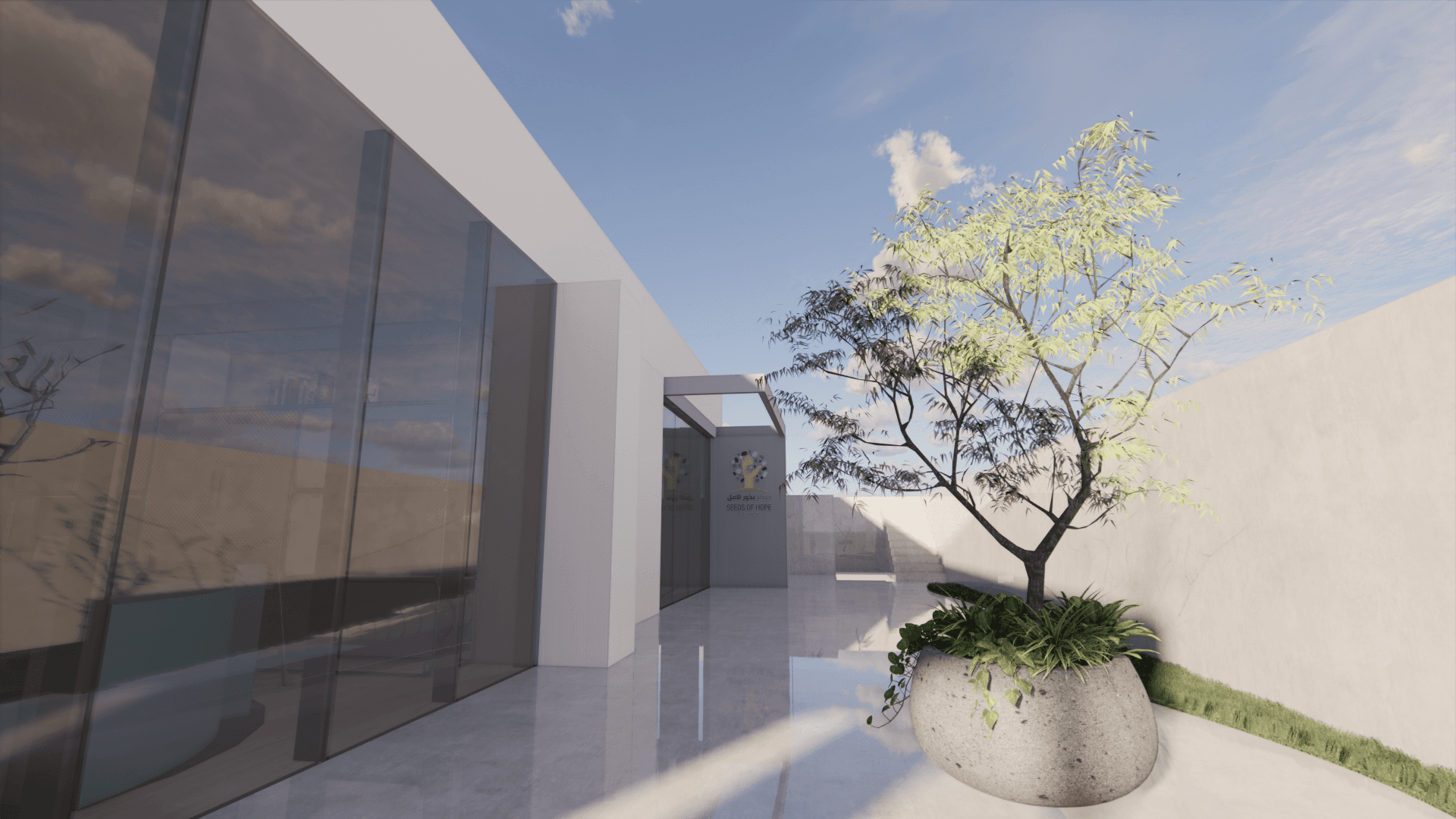
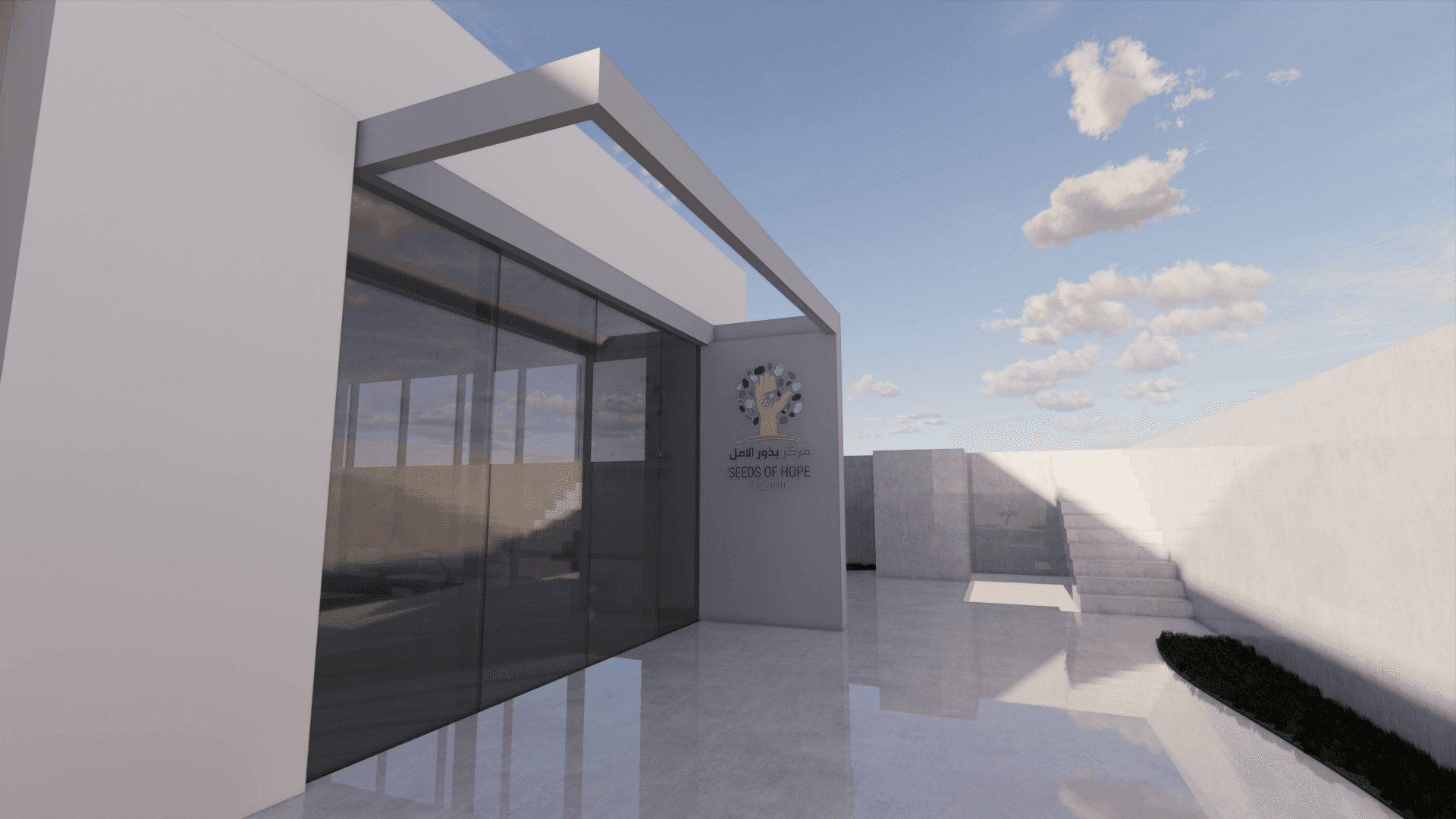
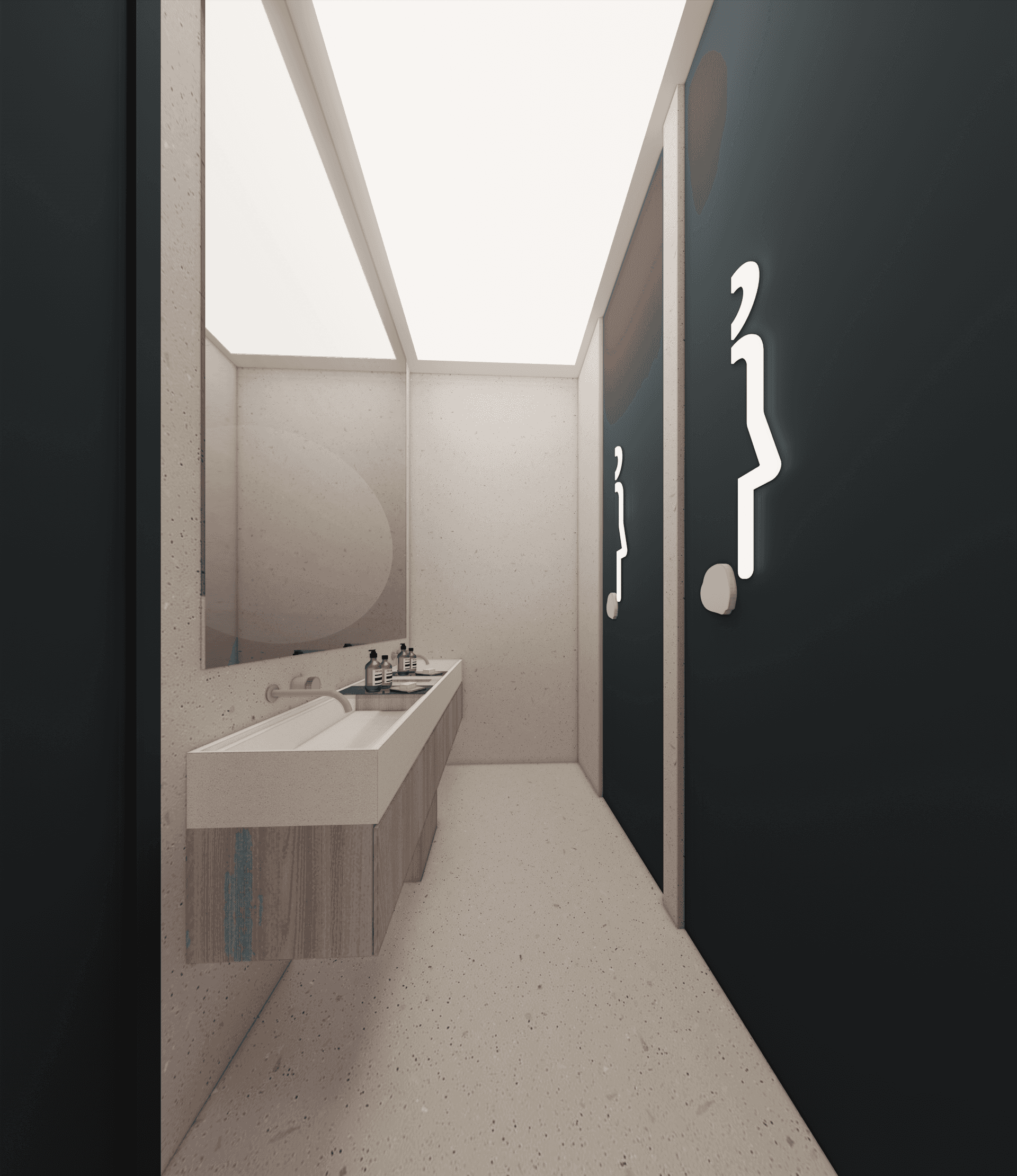
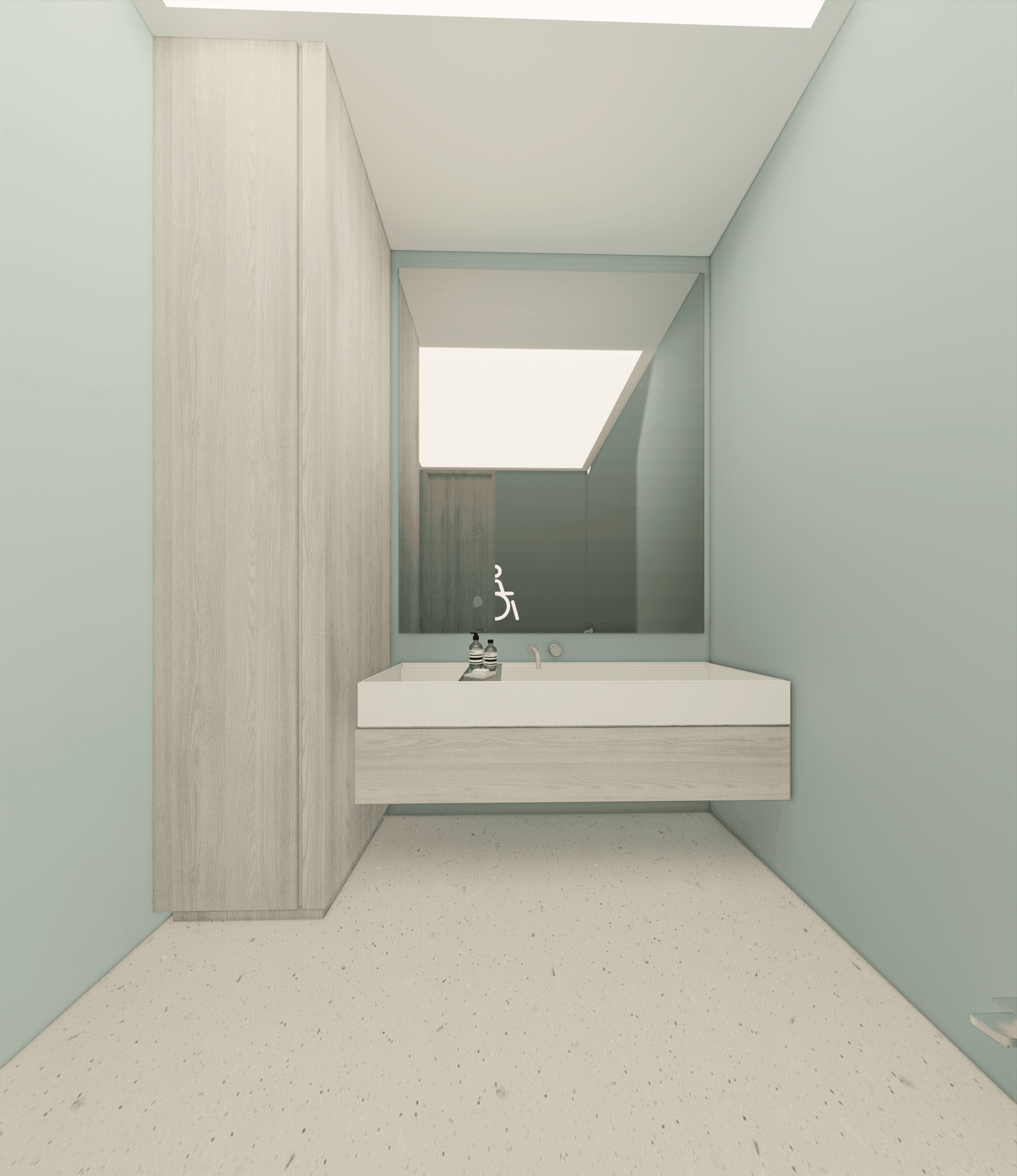
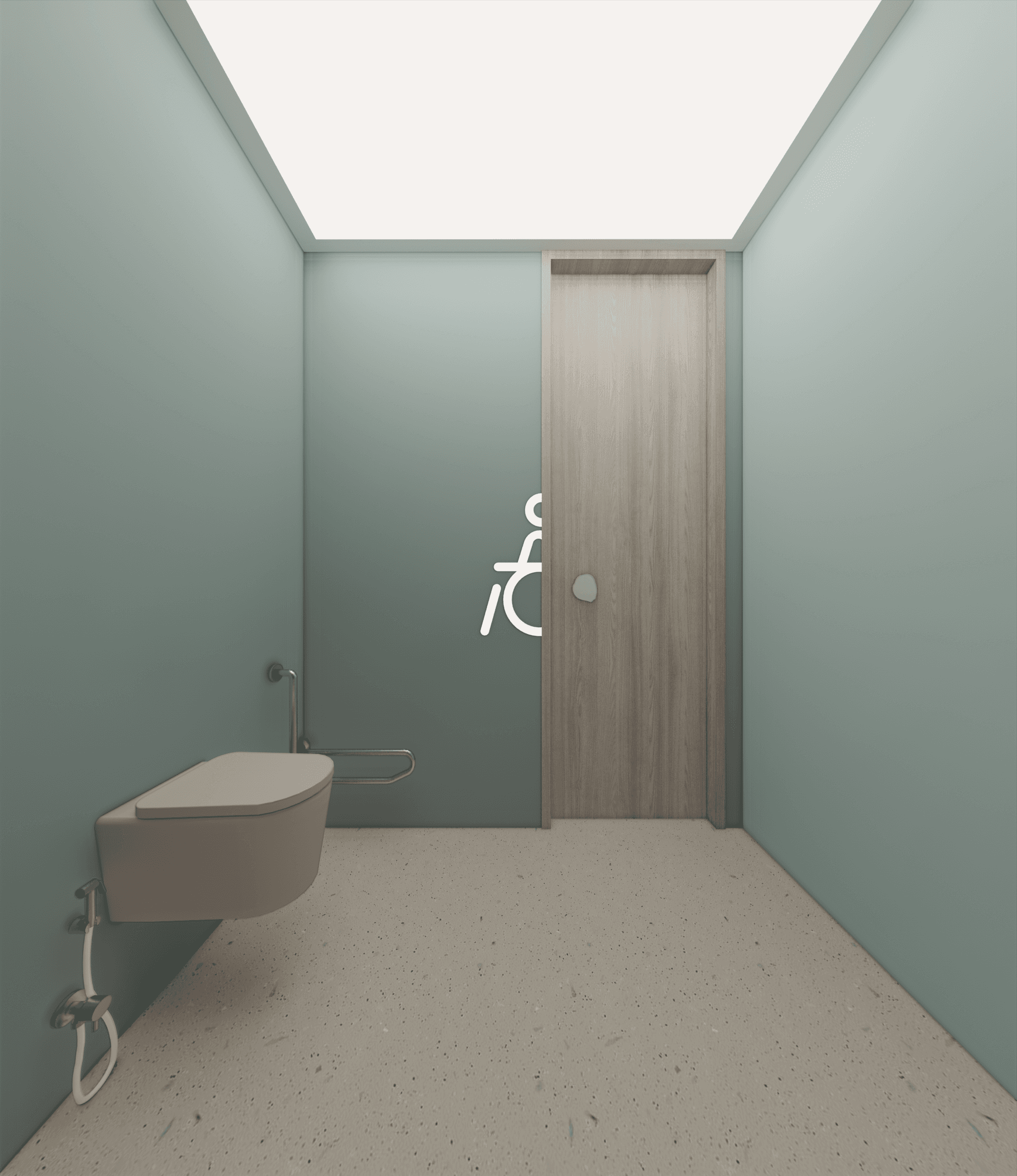
The interior architecture of the Seeds of Hope institute was conceived as a therapeutic environment where spatial planning, materiality, and color work together to support healing and personal development. Covering 2,300 square meters, the design follows the organization’s branding guidelines, translating its identity into a cohesive interior language through a carefully curated color palette and calming spatial atmosphere.
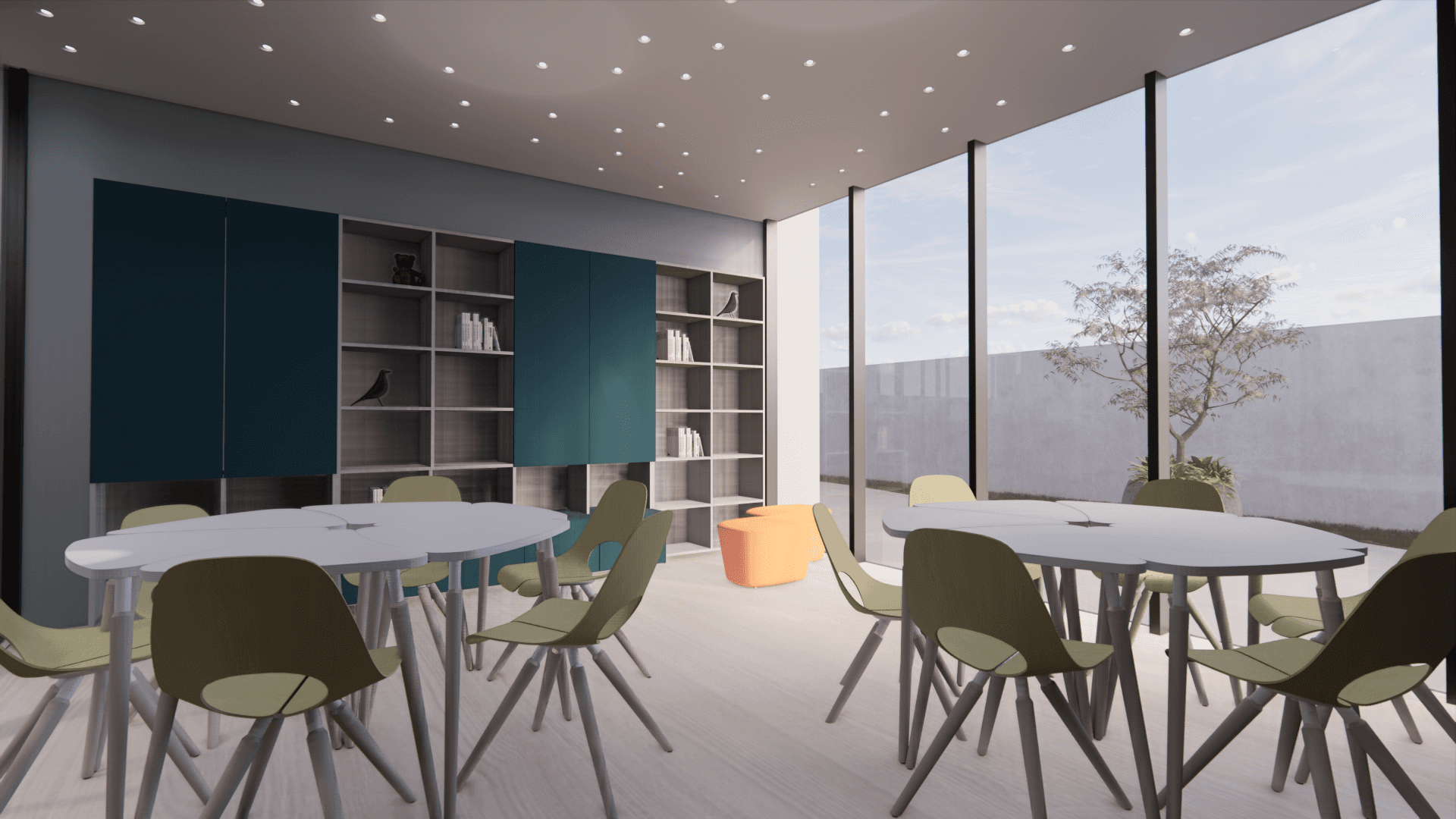
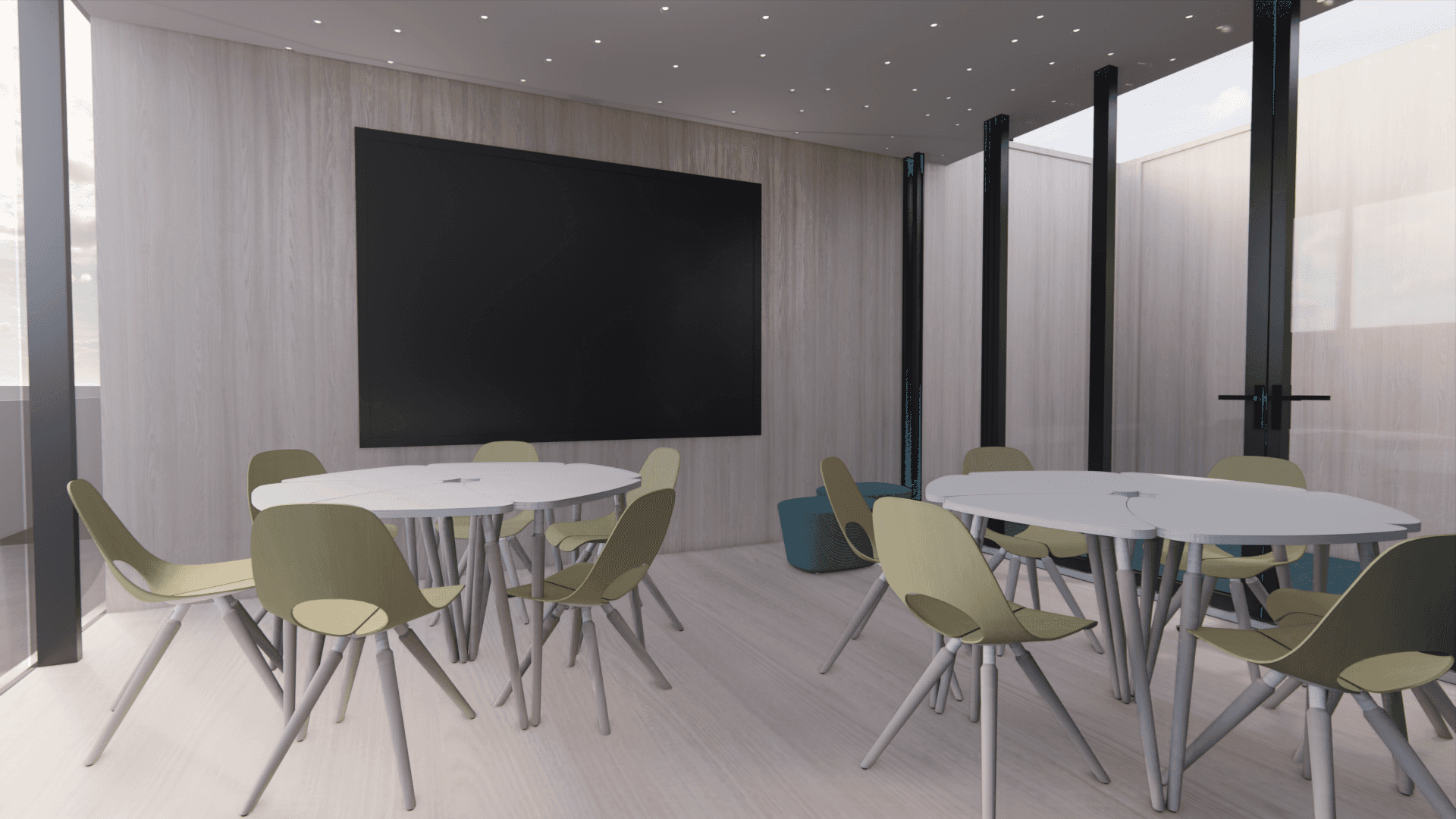
The layout is organized to accommodate a diverse range of therapeutic functions while maintaining clarity, accessibility, and privacy. Dedicated zones were designed for speech therapy, occupational therapy, and behavioral therapy, alongside flexible spaces for educational workshops, accent modification training, shadow teacher training, and public speaking development.
Each environment was shaped to respond to the specific sensory and functional needs of its users, balancing acoustic control, comfortable circulation, and adaptable learning areas. The resulting spatial experience fosters a sense of safety, focus, and optimism—allowing the architecture itself to become part of the therapeutic journey toward growth and well-being.
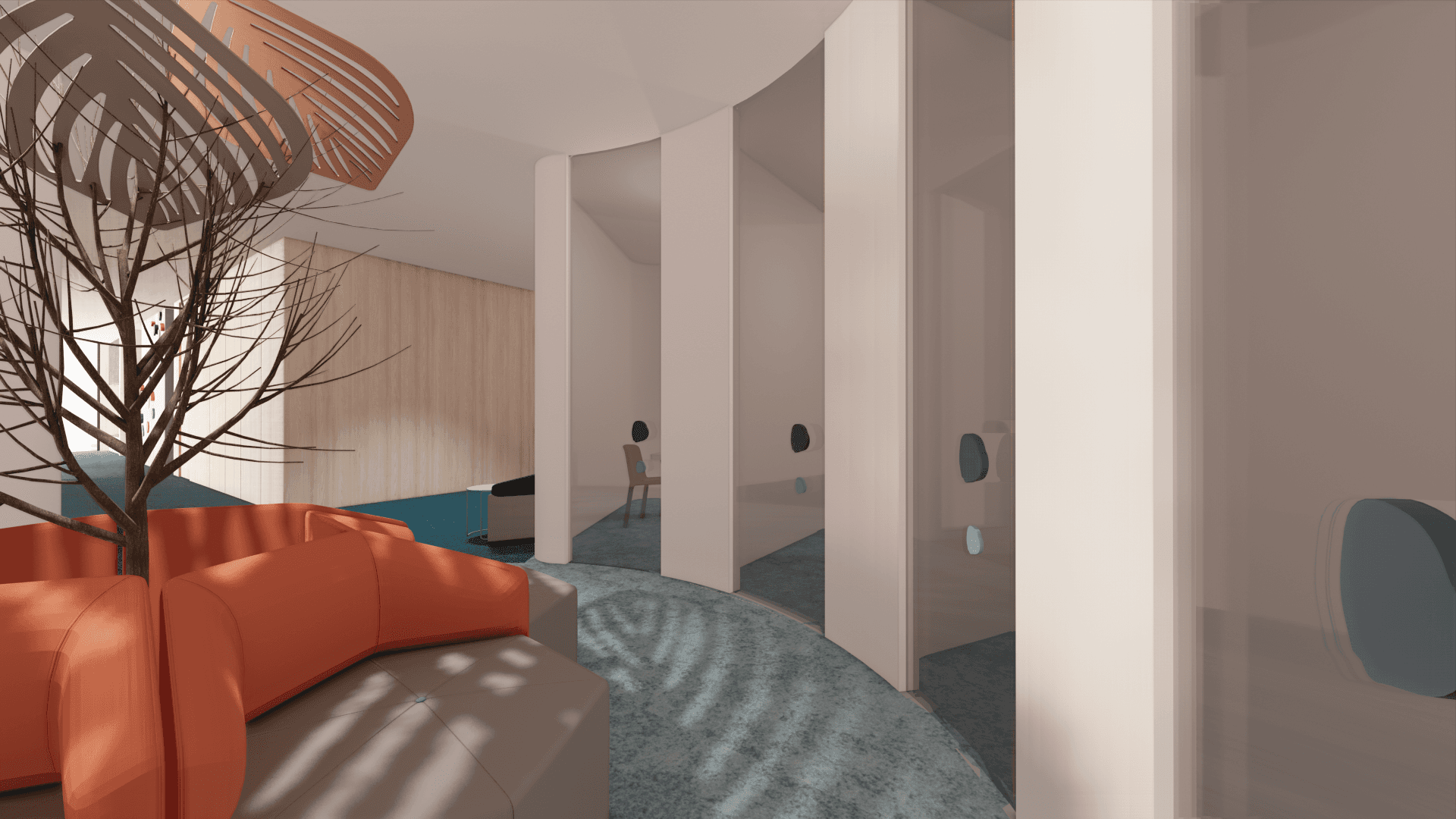
The interior architecture of the Seeds of Hope institute was conceived as a therapeutic environment where spatial planning, materiality, and color work together to support healing and personal development. Covering 2,300 square meters, the design follows the organization’s branding guidelines, translating its identity into a cohesive interior language through a carefully curated color palette and calming spatial atmosphere.
The layout is organized to accommodate a diverse range of therapeutic functions while maintaining clarity, accessibility, and privacy. Dedicated zones were designed for speech therapy, occupational therapy, and behavioral therapy, alongside flexible spaces for educational workshops, accent modification training, shadow teacher training, and public speaking development.
Each environment was shaped to respond to the specific sensory and functional needs of its users, balancing acoustic control, comfortable circulation, and adaptable learning areas. The resulting spatial experience fosters a sense of safety, focus, and optimism—allowing the architecture itself to become part of the therapeutic journey toward growth and well-being.
(Other works)