ROYAL AUTOMOTIVE MUSEUM
Scope
Architecture , Interior Architecture , landscape design
Year
2025
Type
Institutional
Size
7,700 m²
Status
Conceptual Design
Location
Amman, Jordan
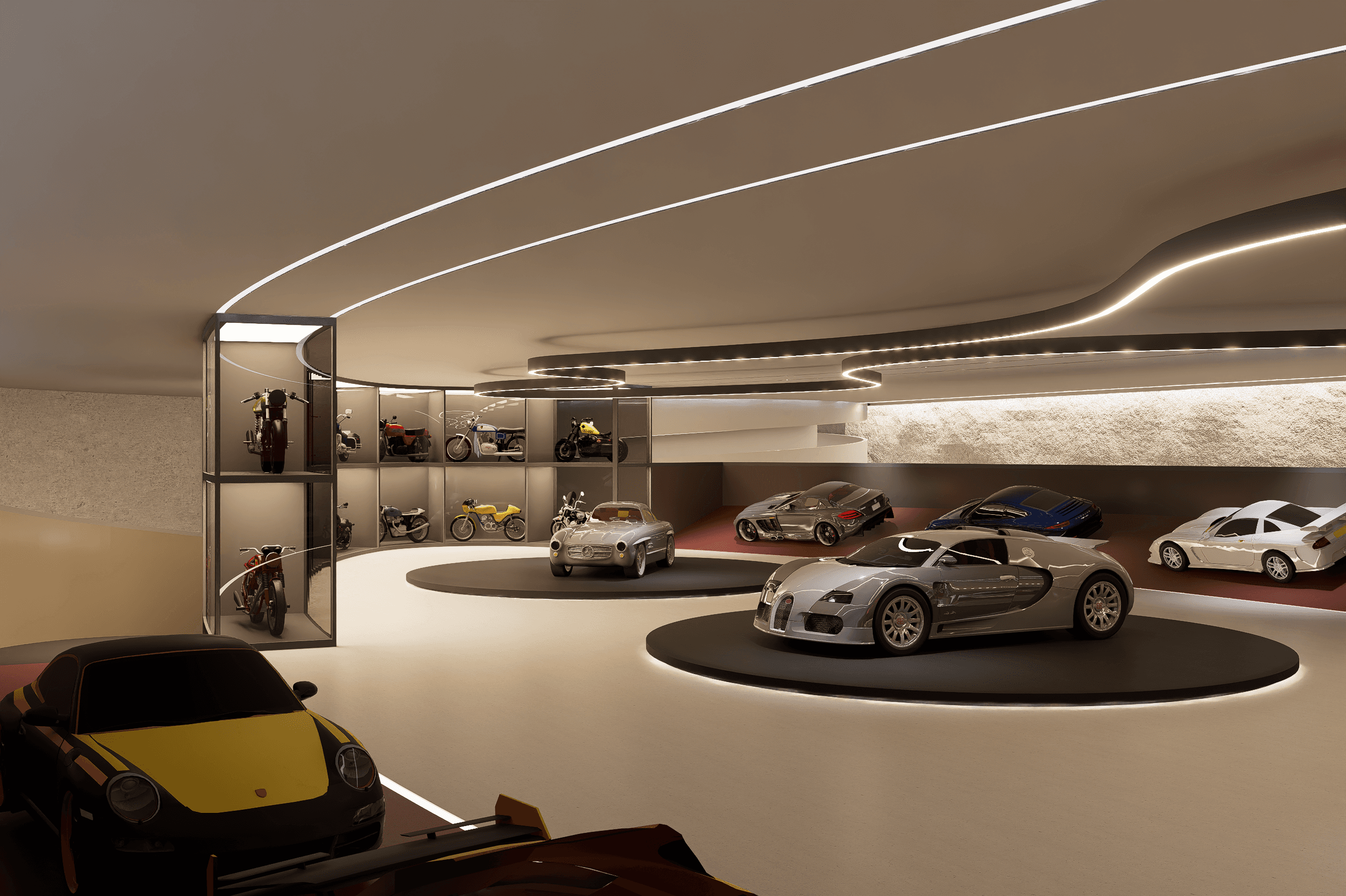
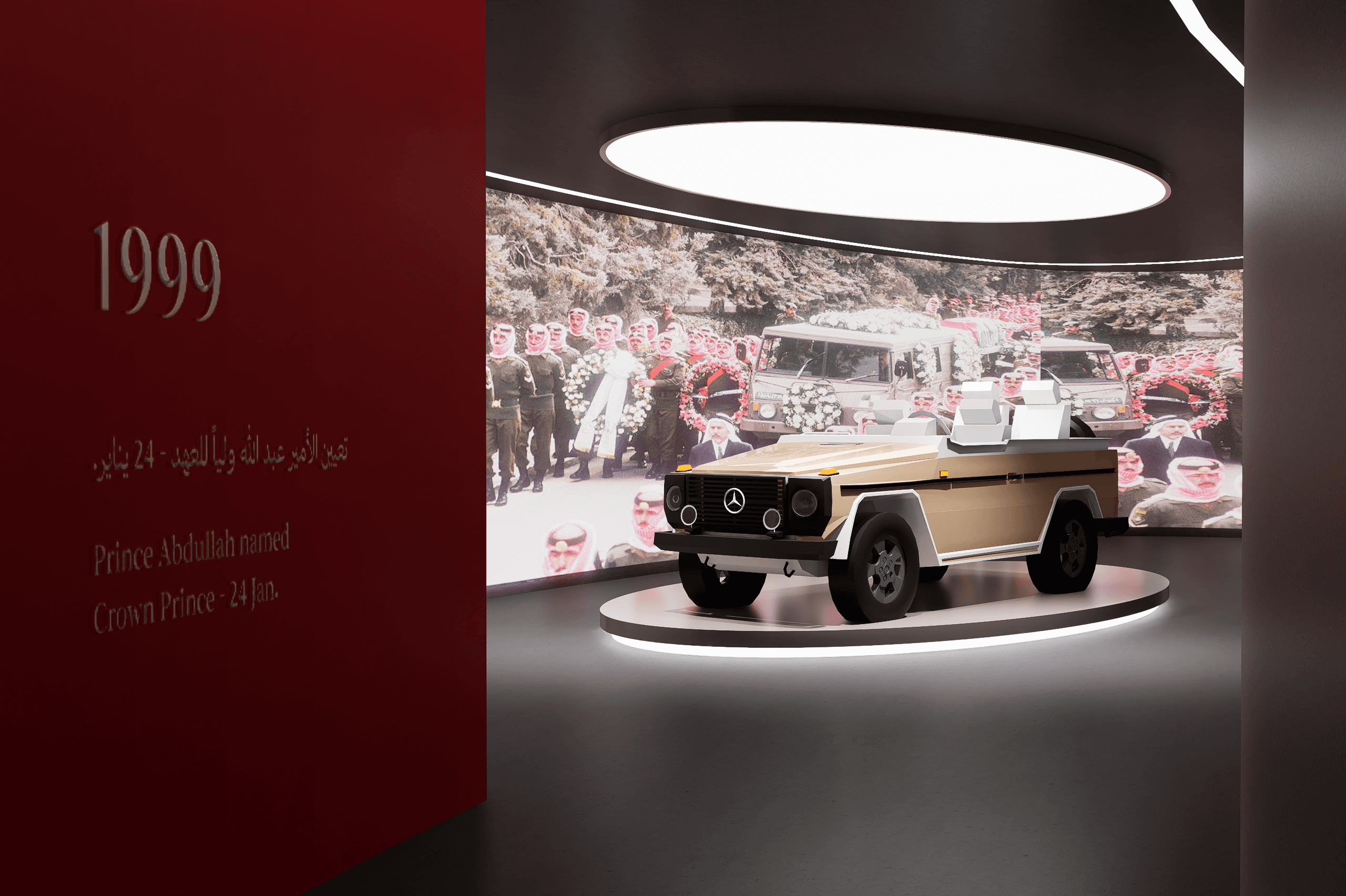
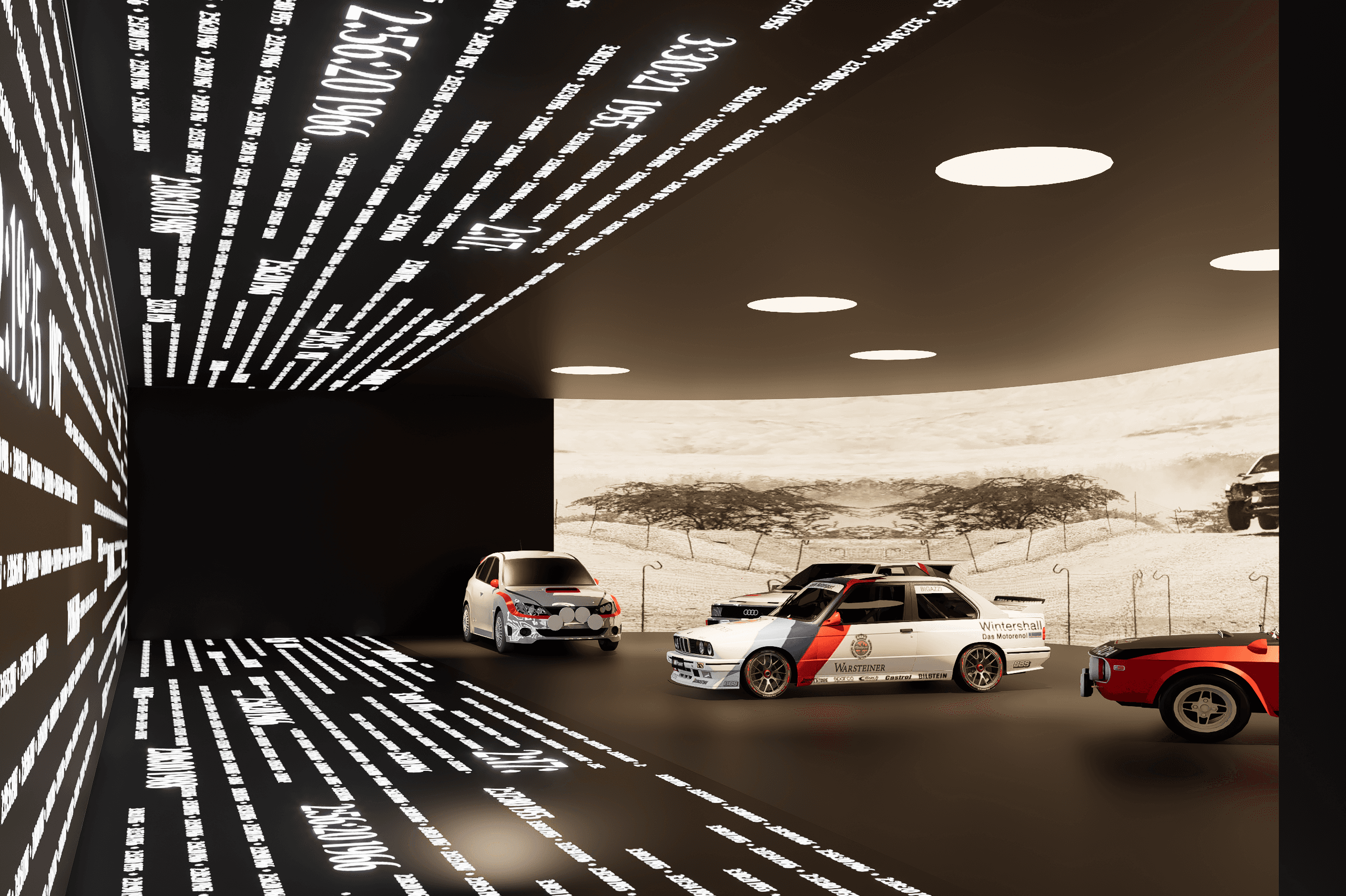
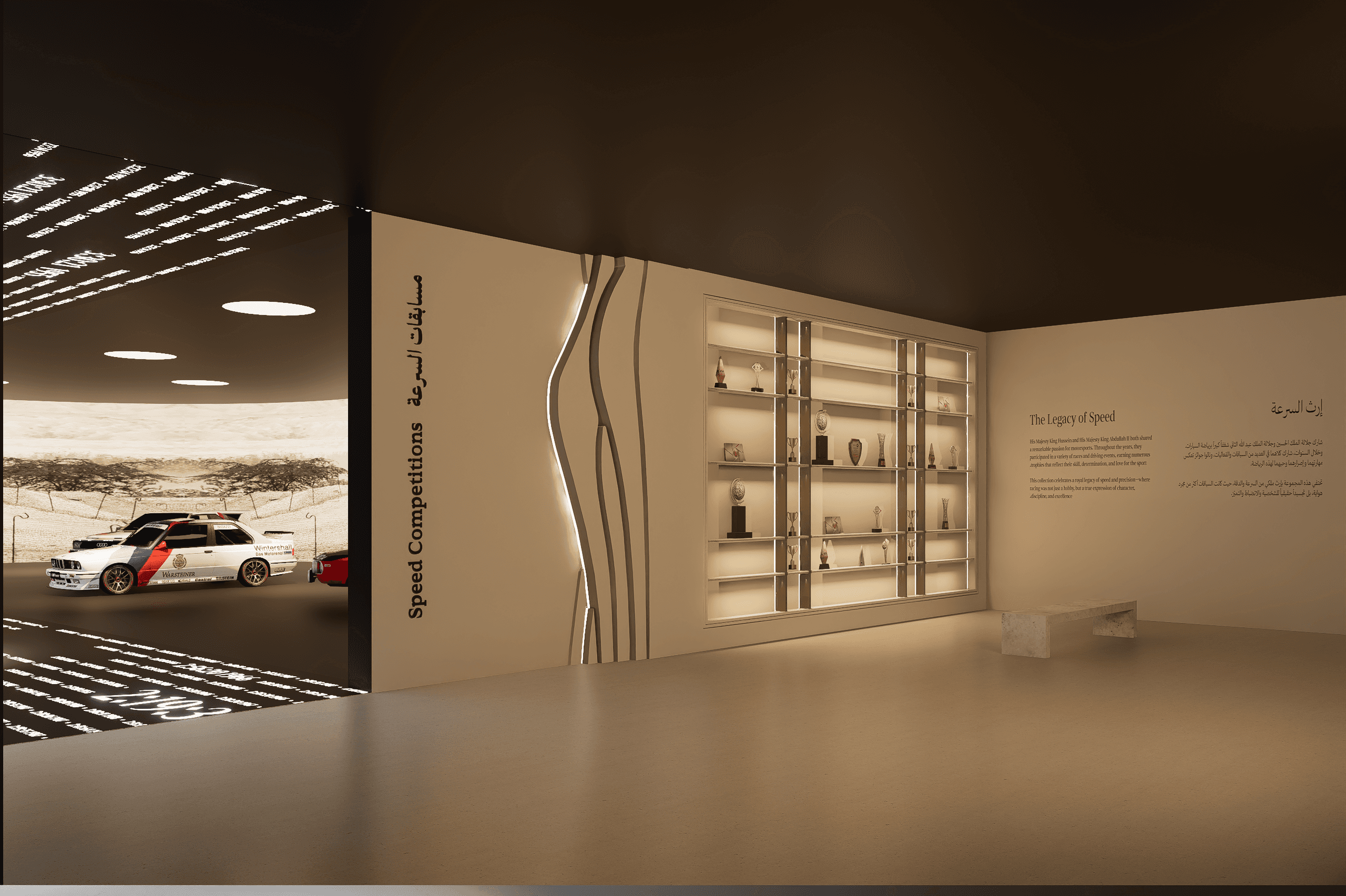
The Design of the museum is guided by both earth and memory, by the terrain beneath the wheels, and by the legacy of a king whose love for cars helped shape Jordan’s automotive culture. The building is not merely a container of vehicles; it is a vessel for stories, speed, legacy, and land.
At its core, the museum was a royal gift from His Majesty King Abdullah II to his beloved father, the late King Hussein, a passionate car lover, and the godfather of rally racing and speed tests in Jordan. This emotional foundation drives the narrative architecture of the project, which seeks to reflect the Kings personal story and national significance.
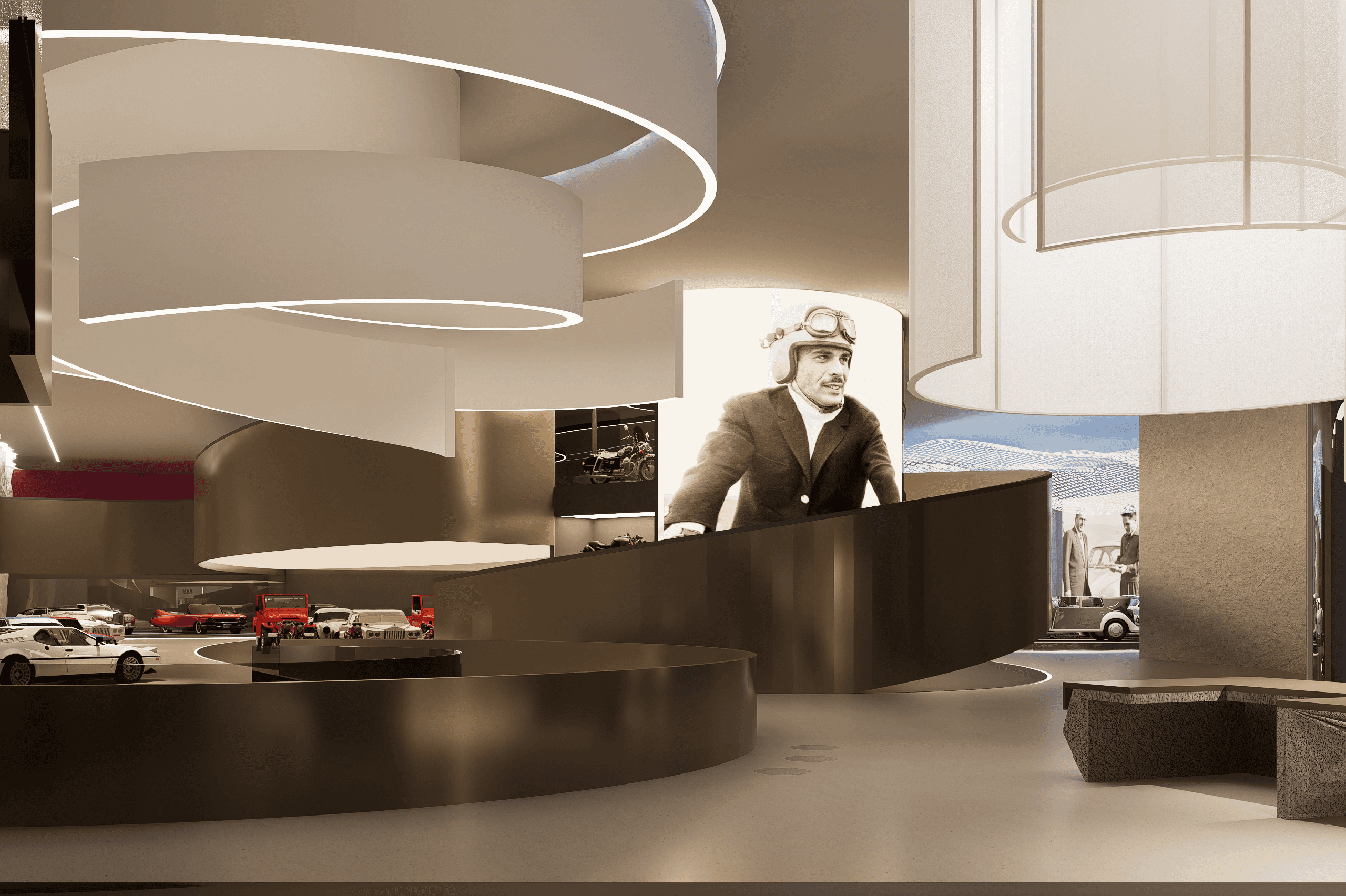
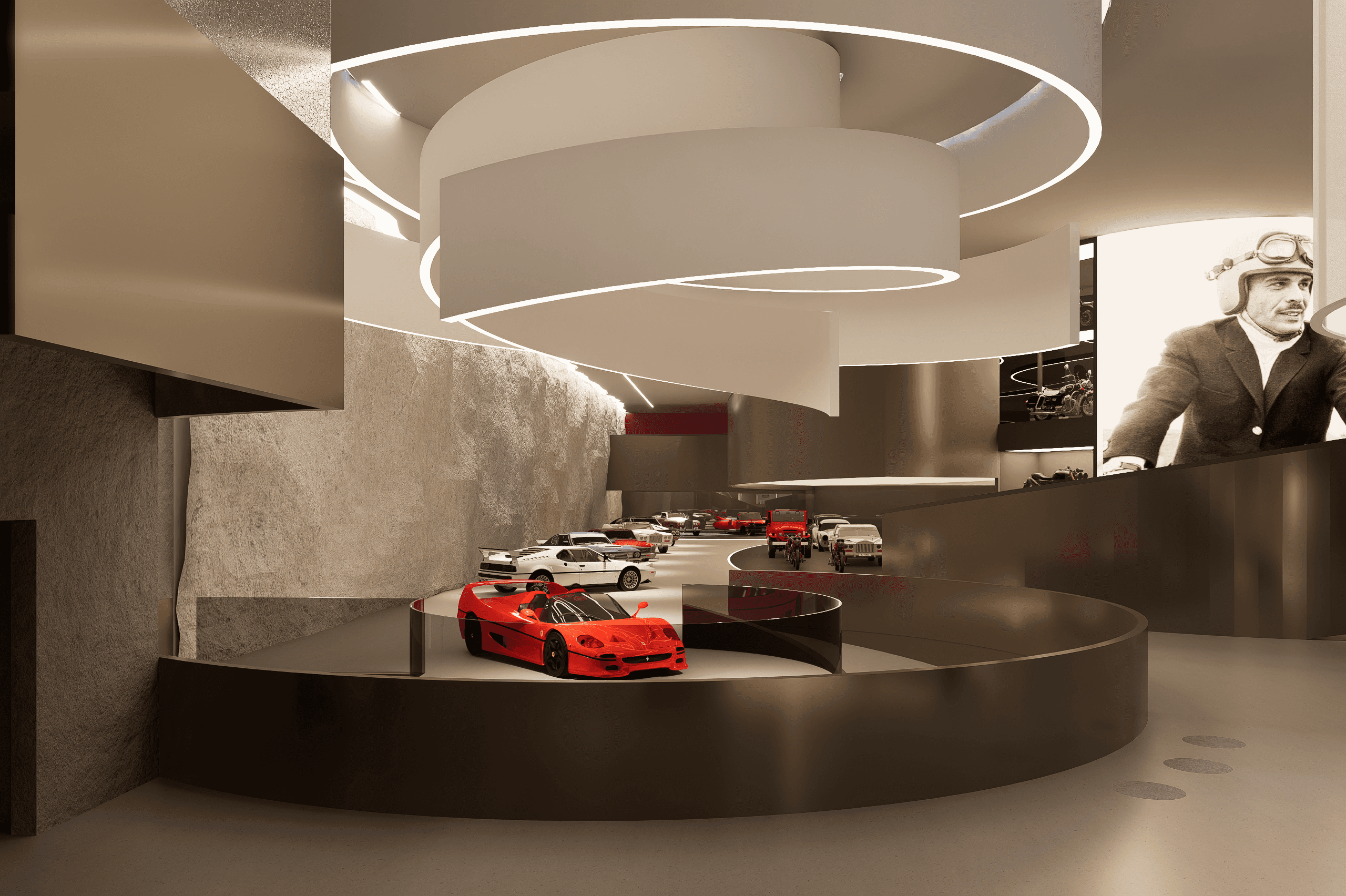
In designing the Jordanian Royal Automobile Museum, we drew inspiration from BMW Welt’s architectural language, particularly its approach to circulation and spatial flow. The dynamic use of ramps and seamless transitions between levels in BMW Welt informed our concept of movement as key design narrative.
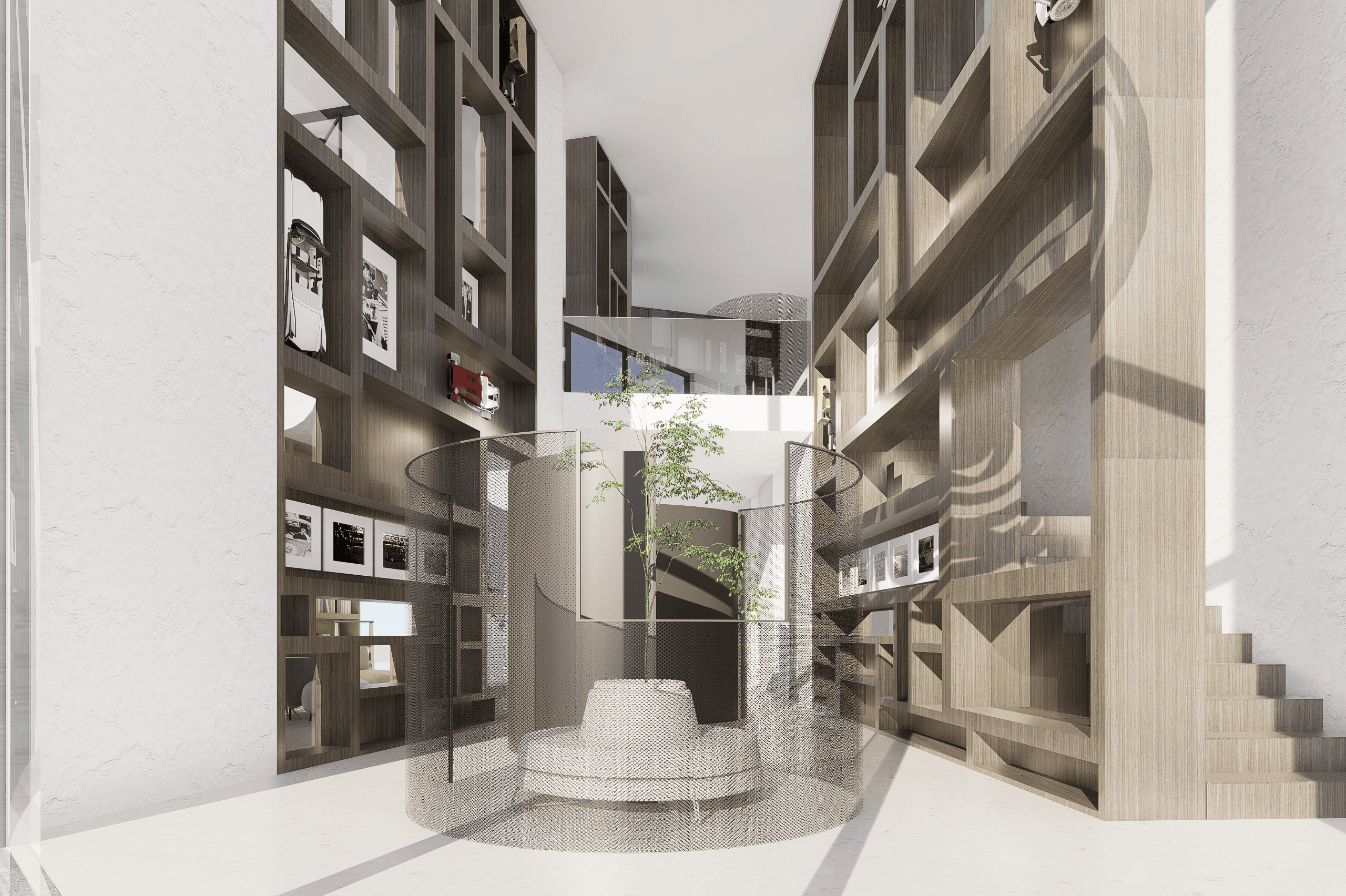
Rather than treating circulation as purely functional element, we saw it as an opportunity to shape as a visitor’s journey, mirroring the fluidity and innovation associated with automotive design. The ramps in our project act as both connective tissue and experiential devices, allowing for gradual spatial reveals and multi-level engagement with exhibits. This approach inspired by BMW Welt, helped us craft a museum experience where movement itself becomes part of the evolution of Jordan’s automotive legacy.
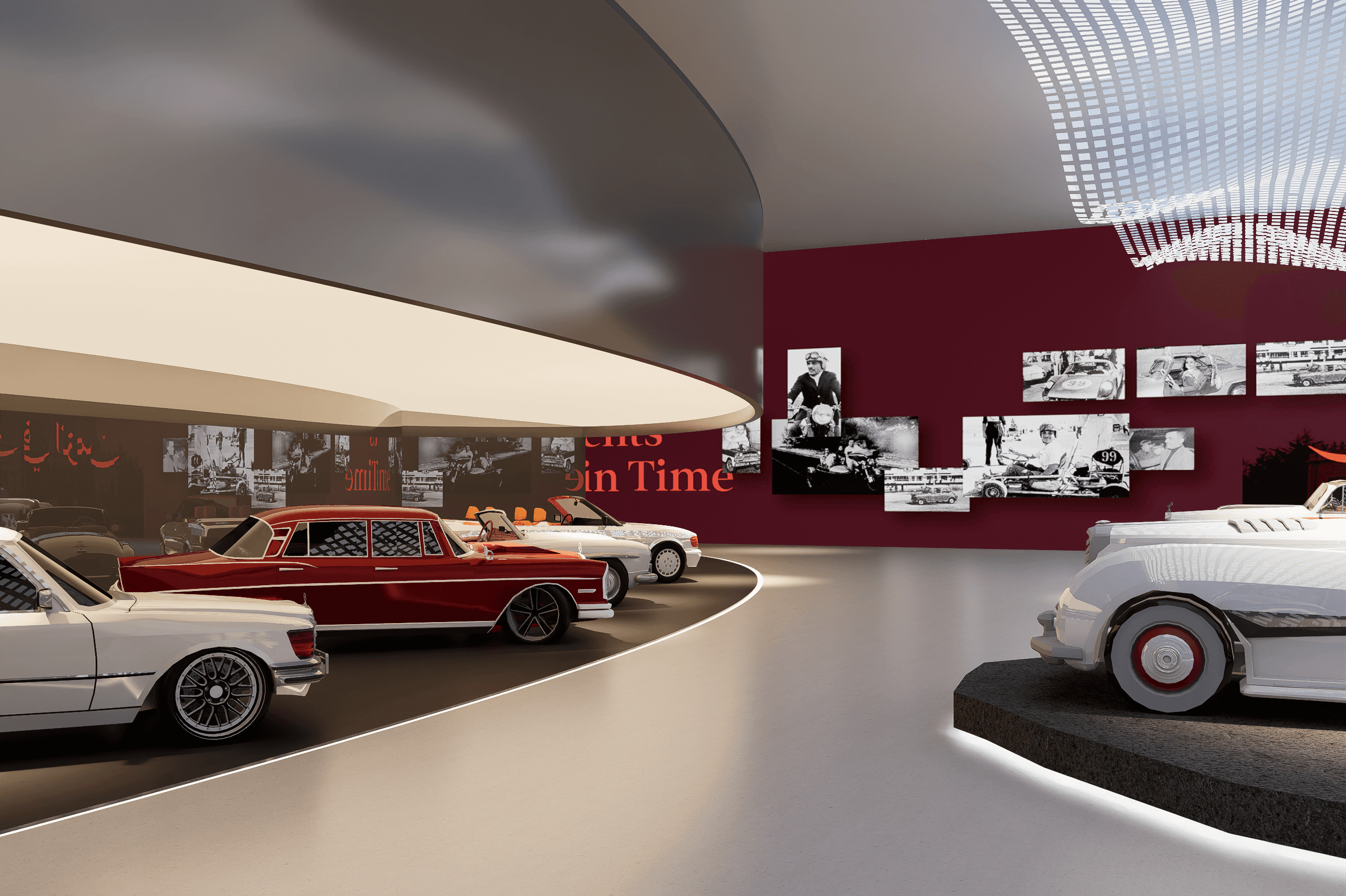
Another key source of inspiration for the museum was the Mercedes-Benz Museum by UN Studio. Its dynamic circulation and strong spatial storytelling particularly informed our approach, especially the way the Stuttgart museum embeds movement into the architectural language, allowing visitors to experience the car collection as a continuous unfolding narrative.
In our project, this idea translates into a fluid layout that guides visitors through the evolution of Jordan’s automotive history. The spatial sequence is conceived as a journey rather than a rigid exhibition path, creating an immersive and progressive visitor experience.
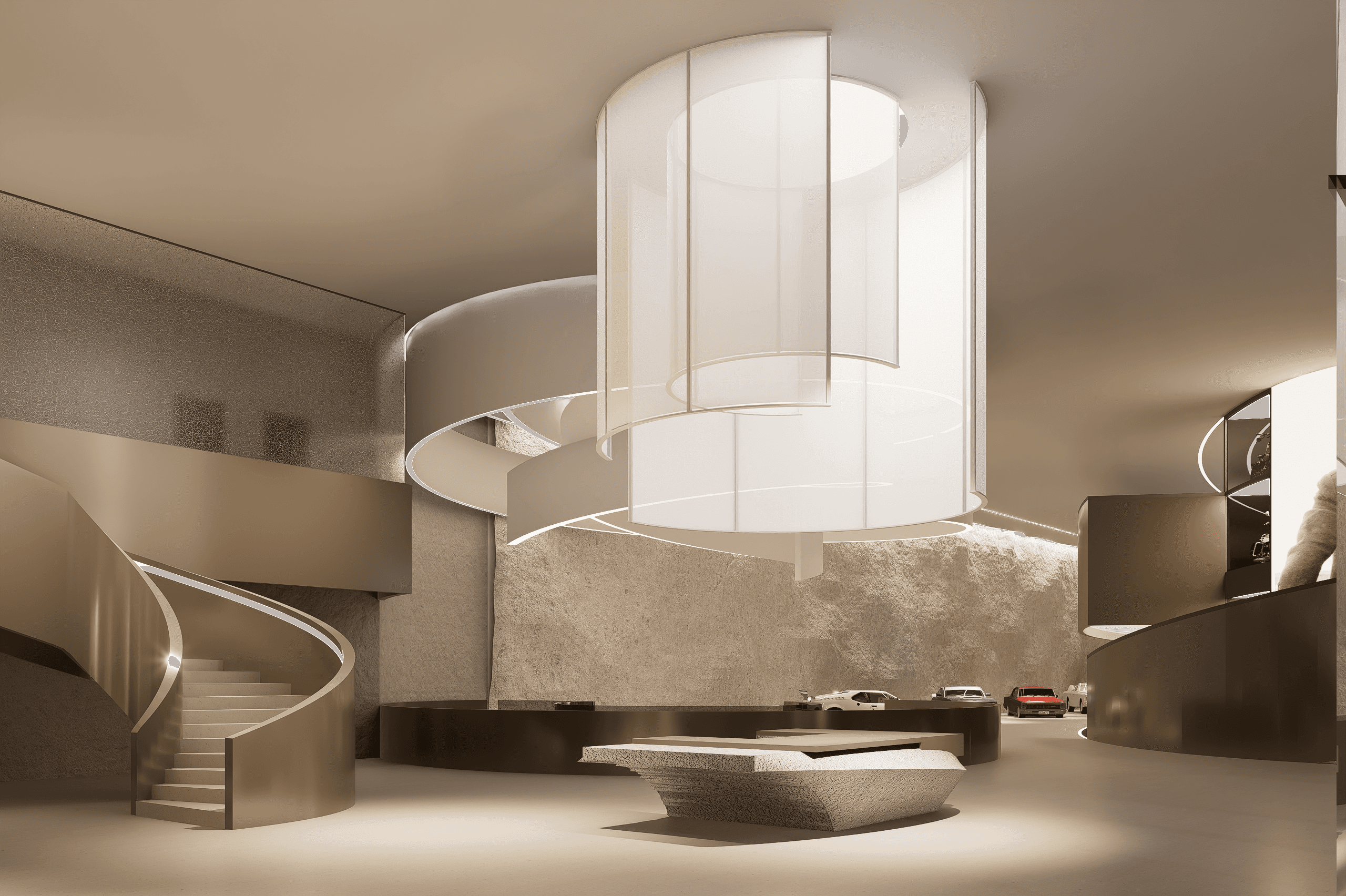
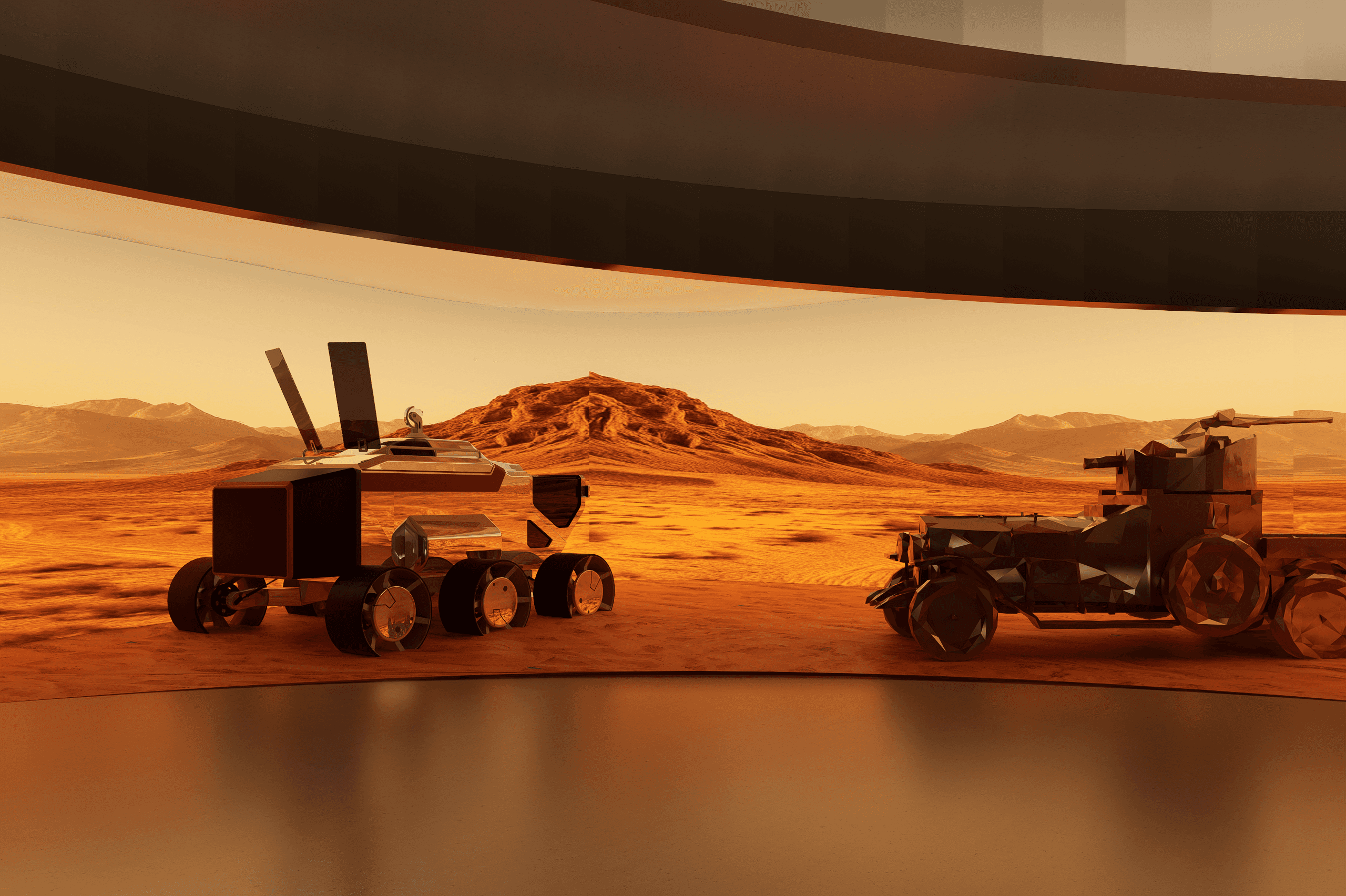
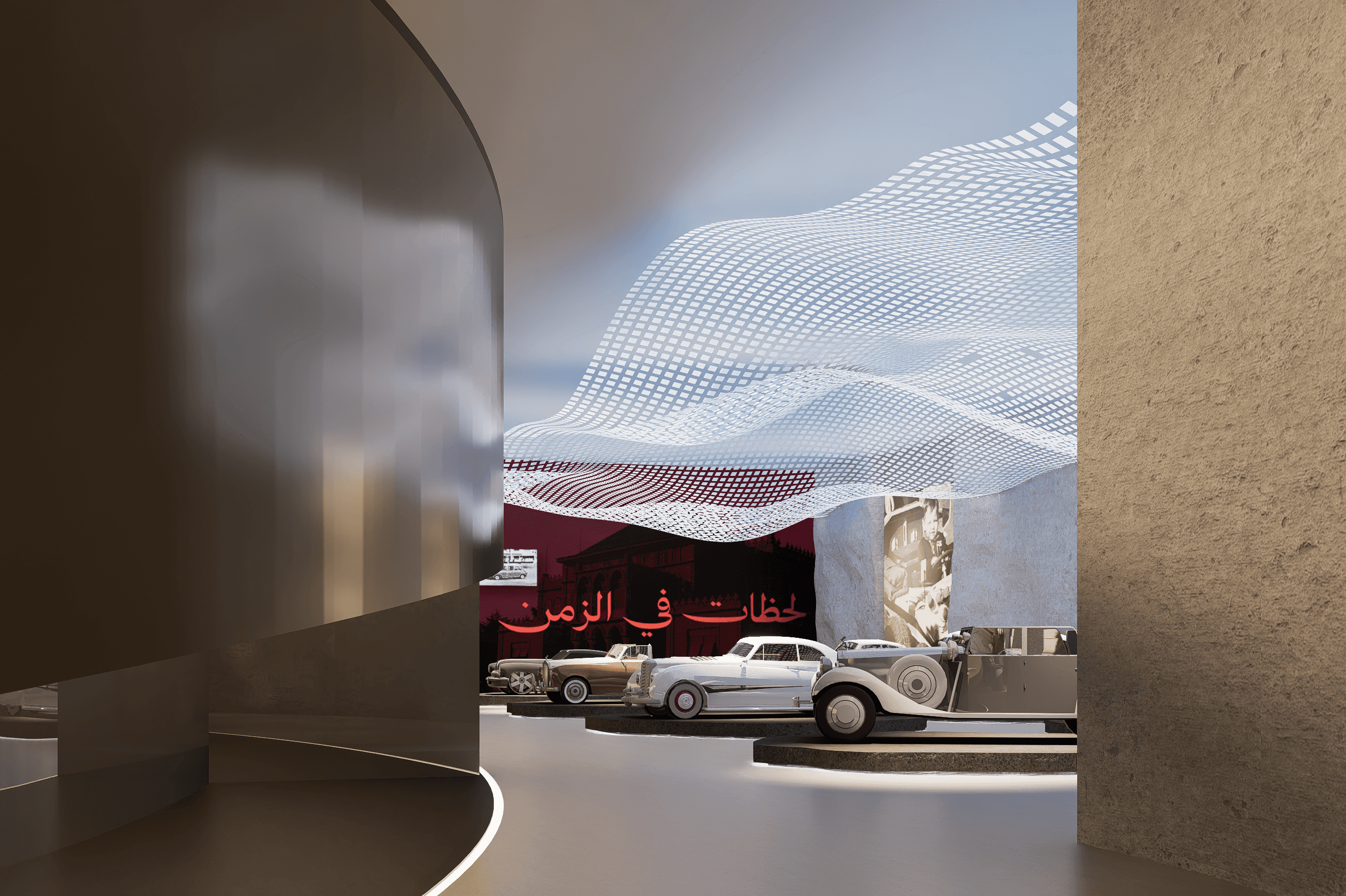
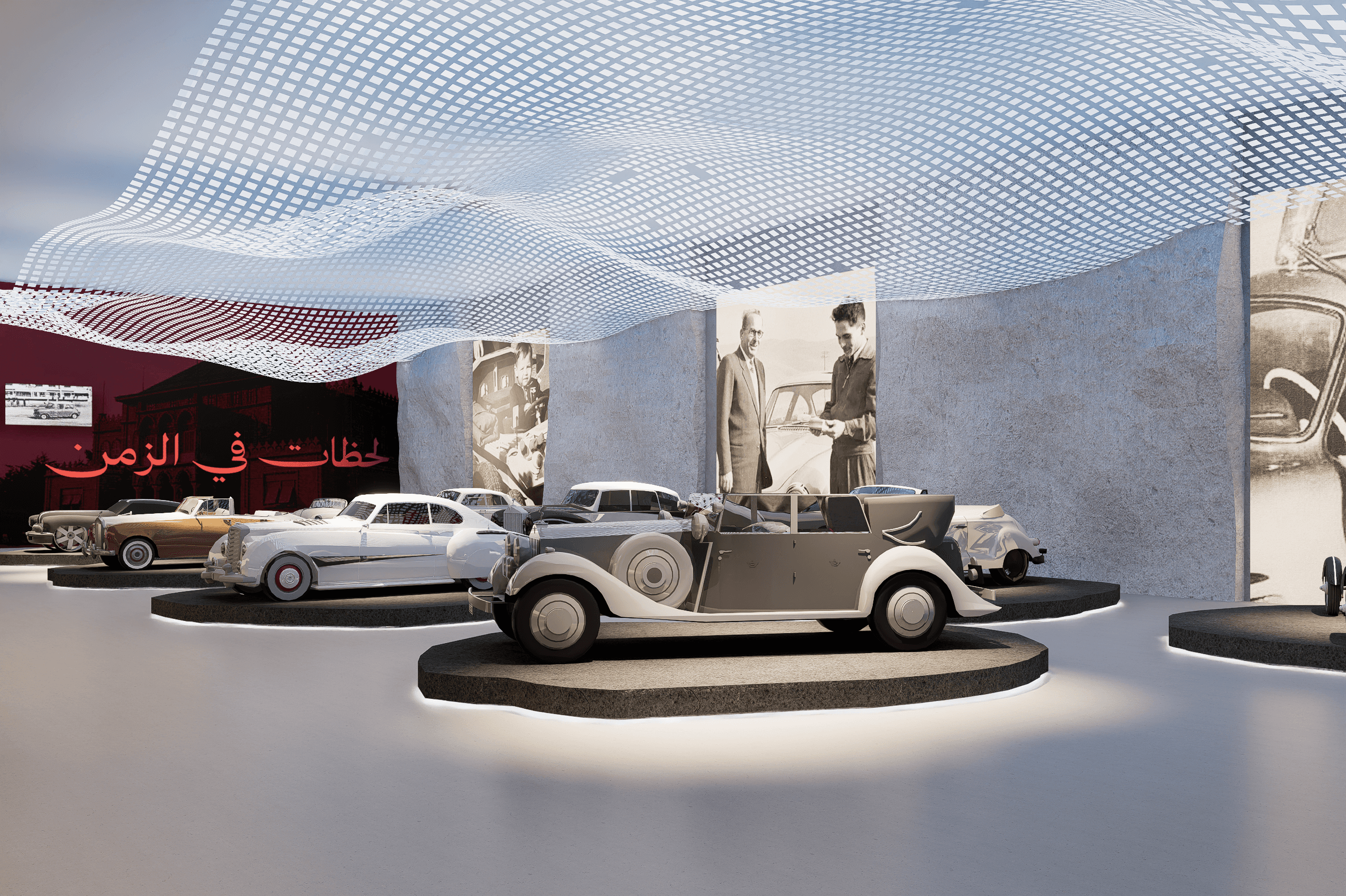
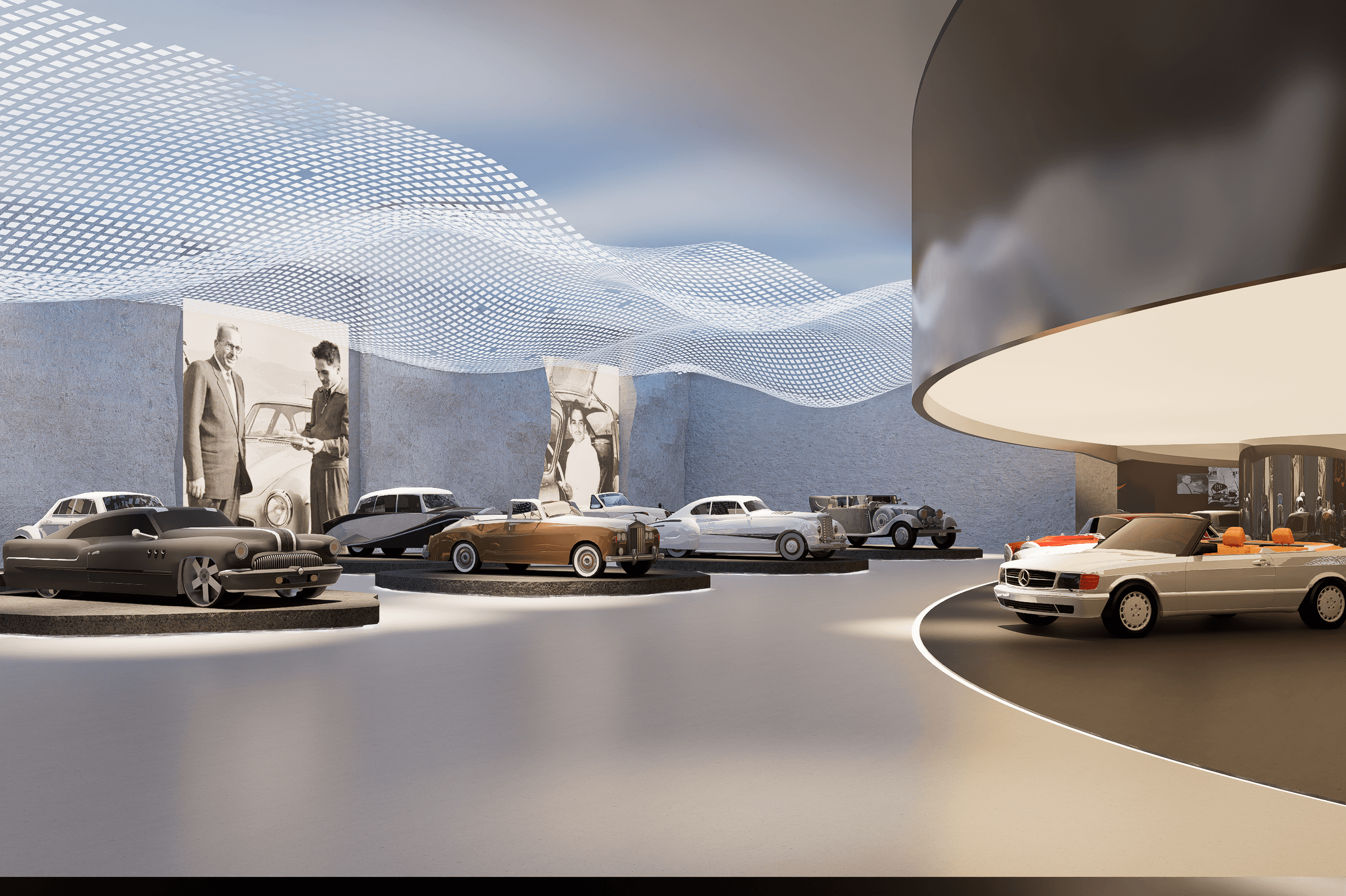
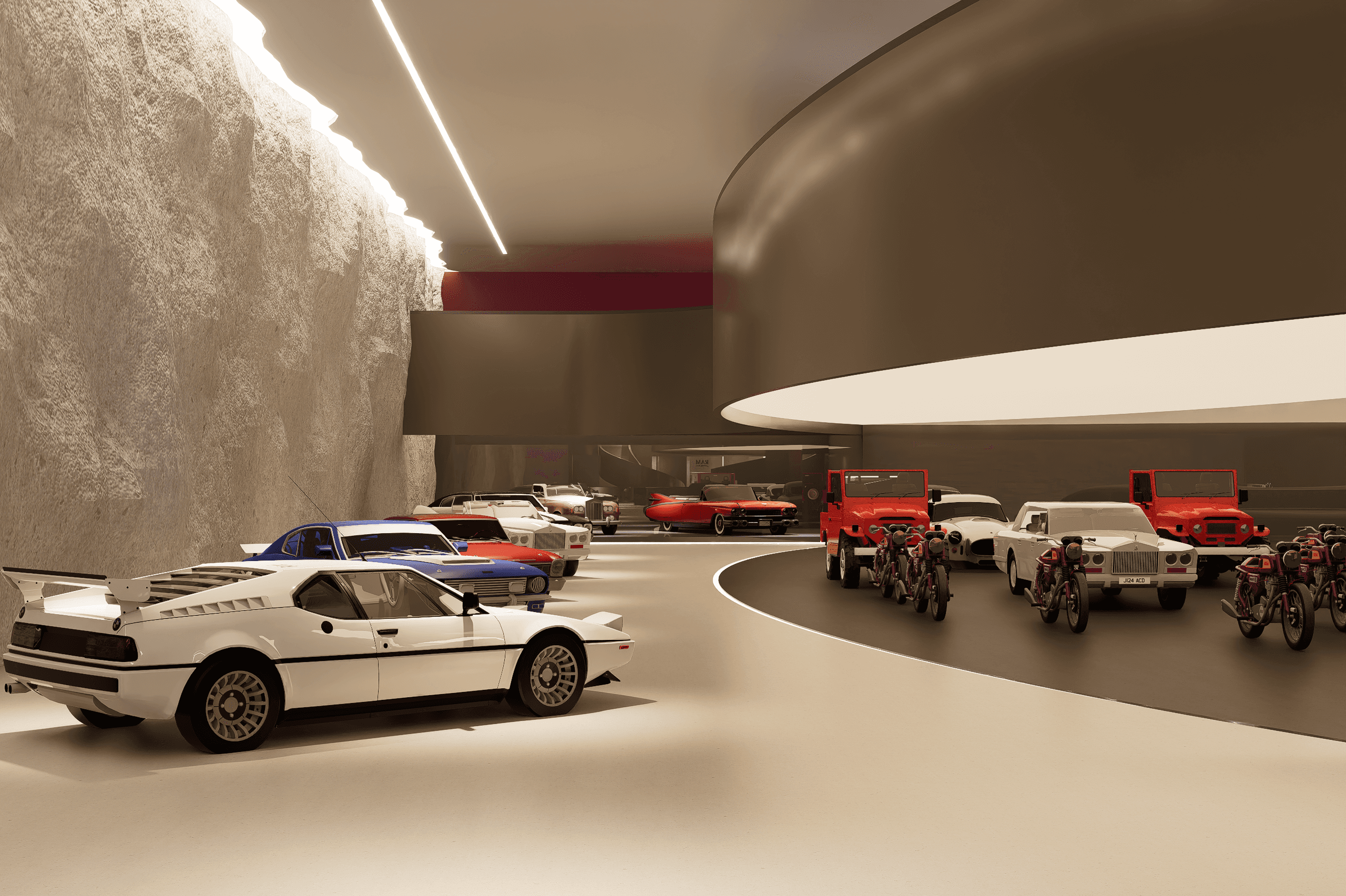
The design of the car museum is deeply rooted in the natural environment; the landscape and terrain are embraced not merely as a backdrop but as an intrinsic medium of architectural expression. The terrain being the cars’ original playground, becomes a conceptual foundation for the buildings form and surface language.
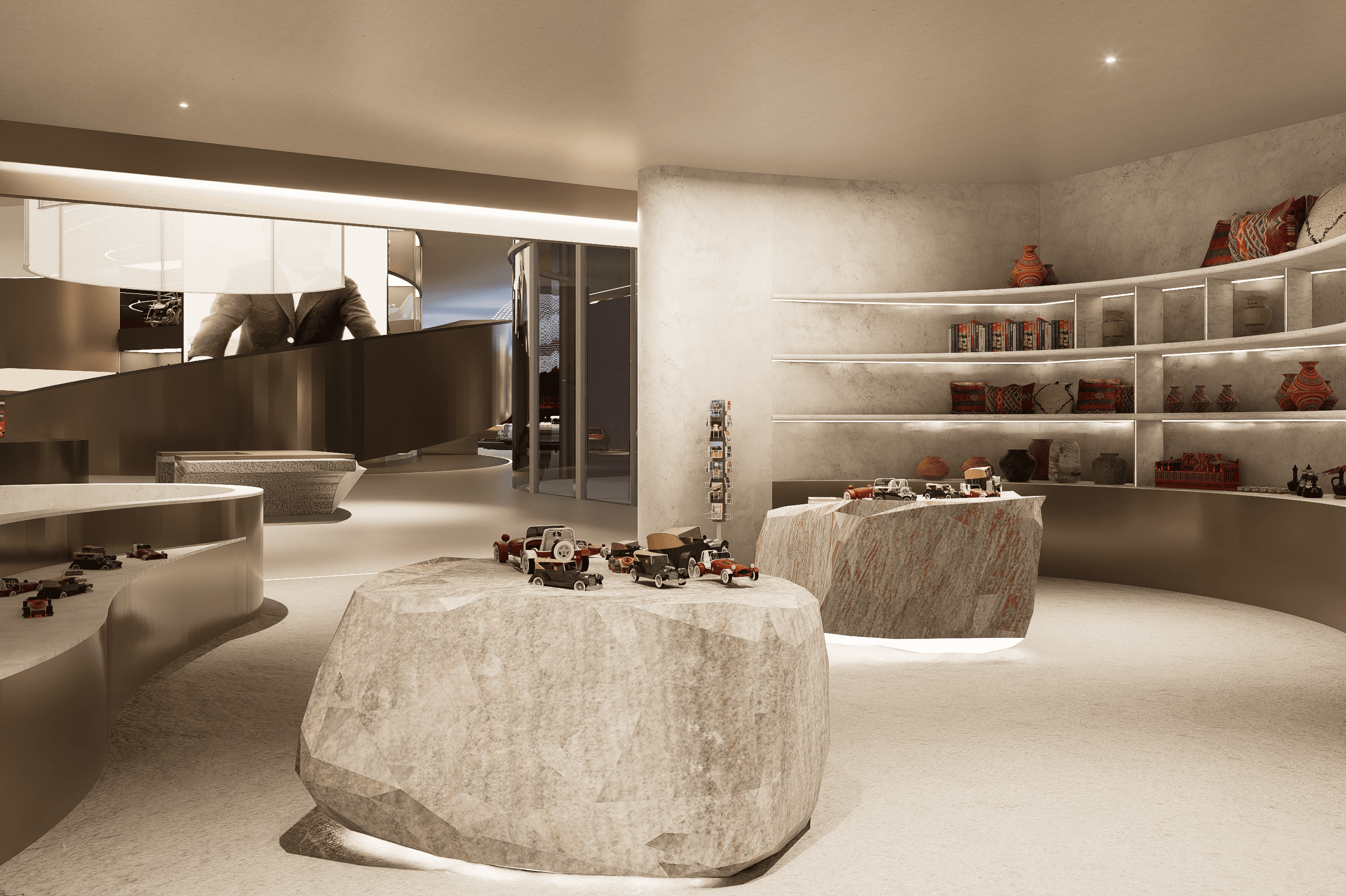
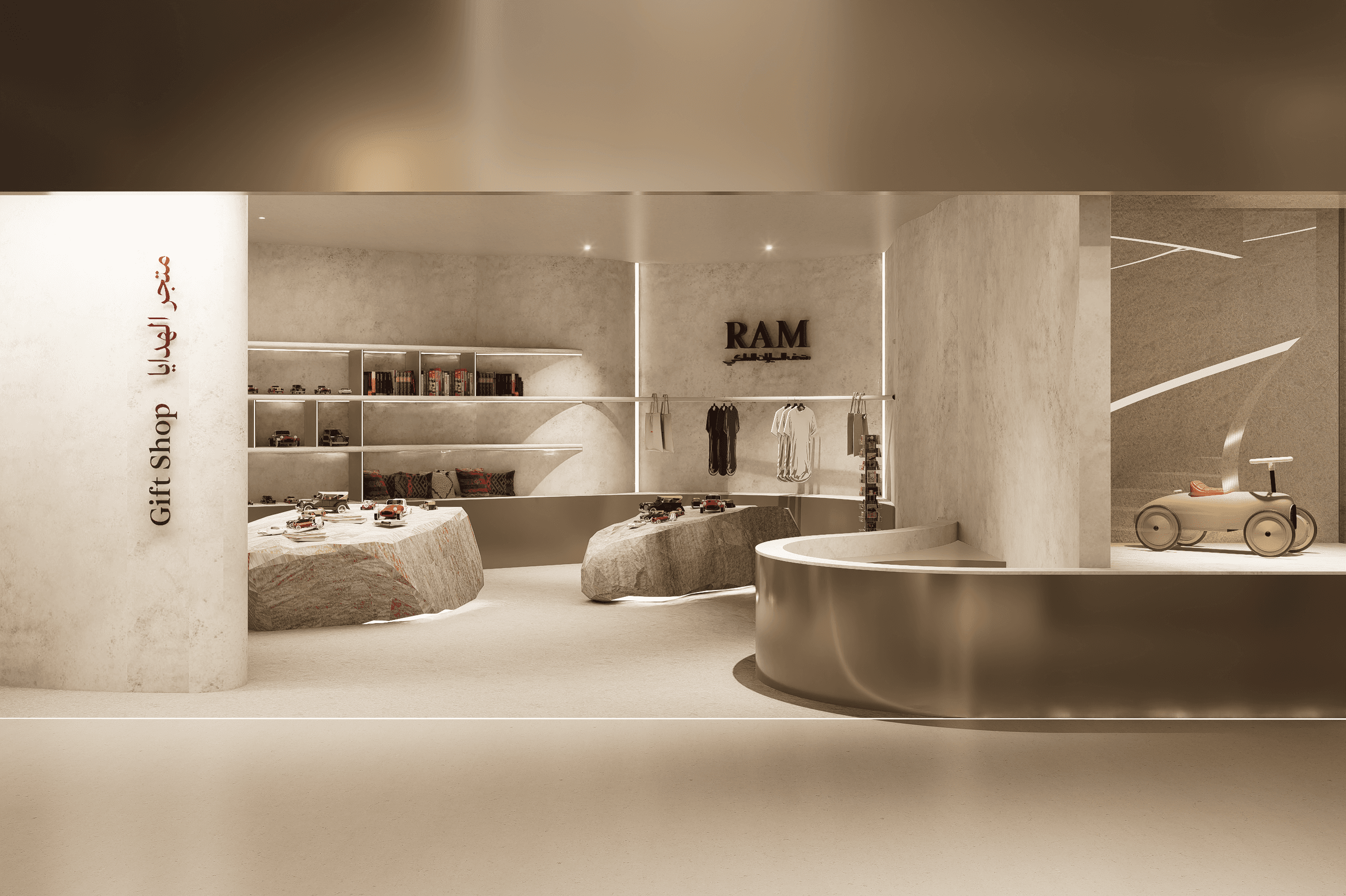
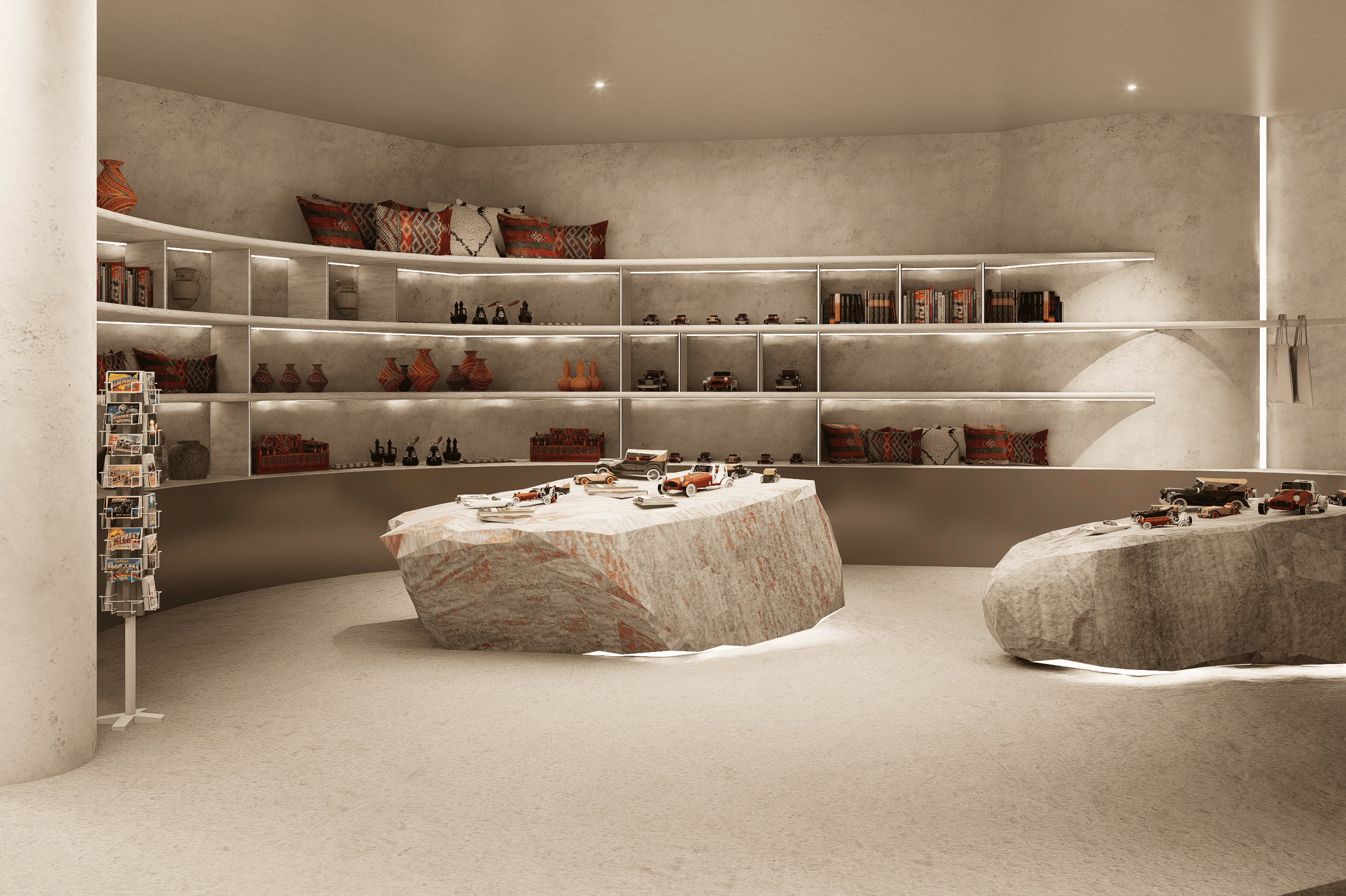
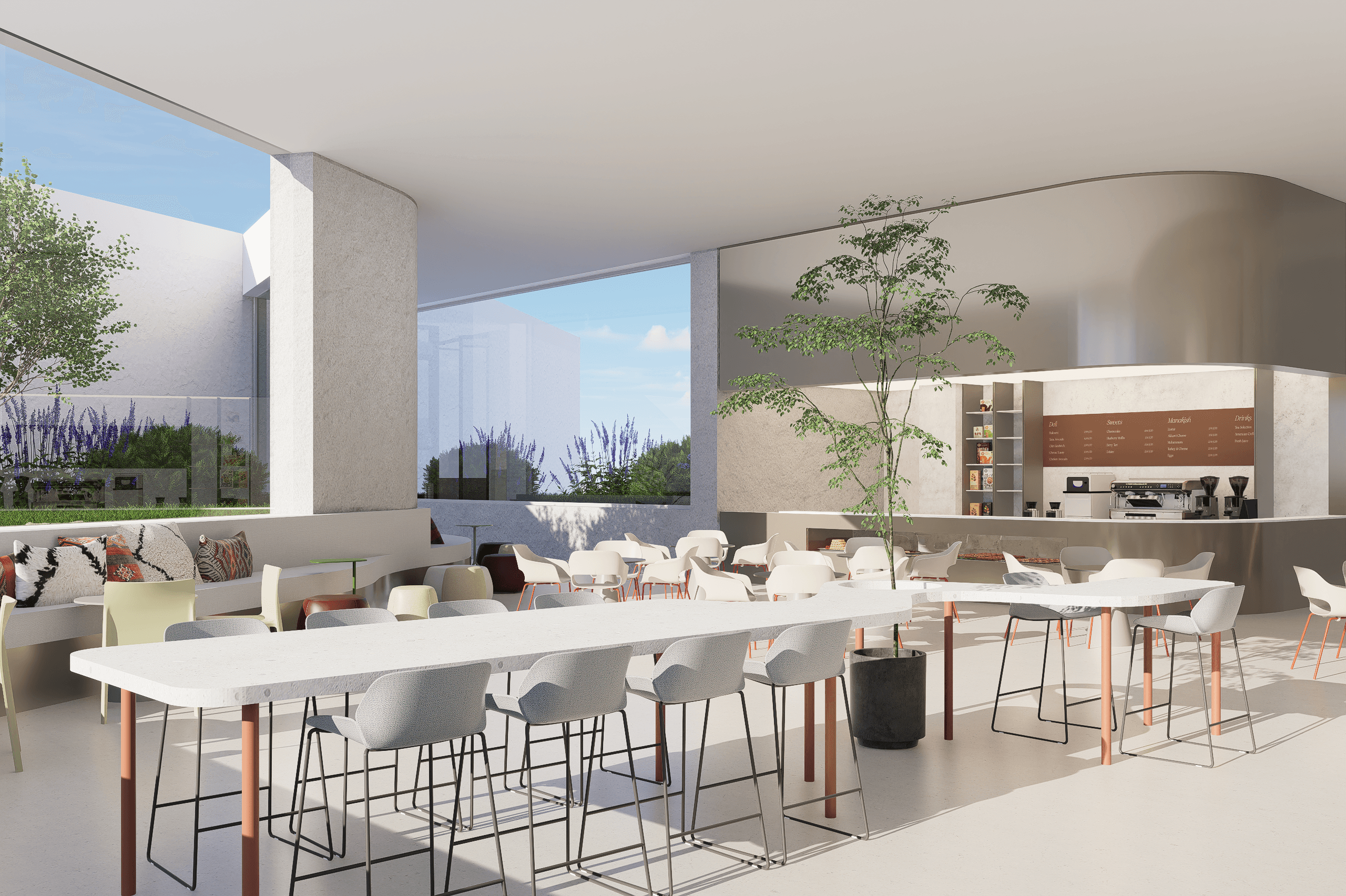
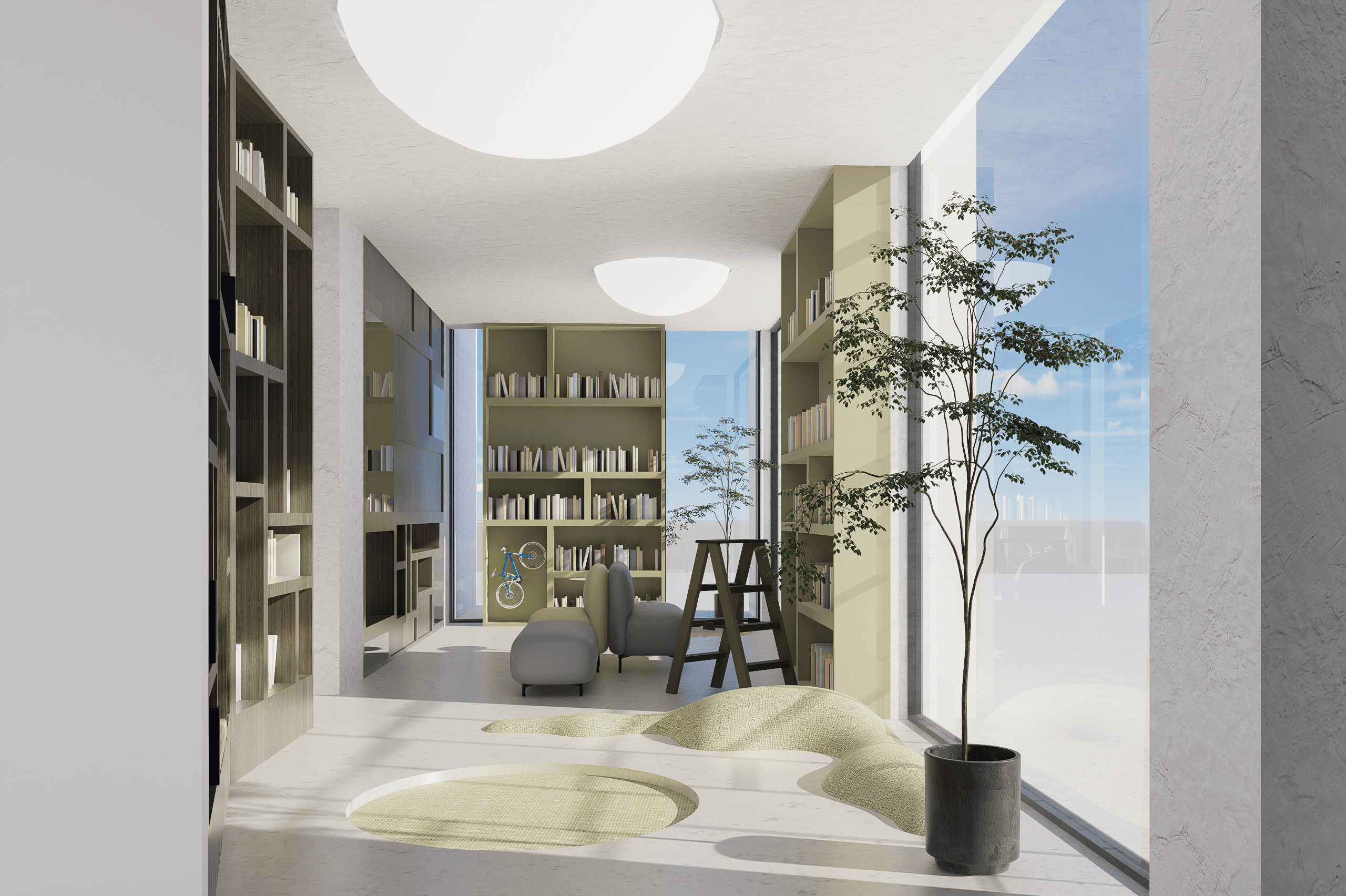
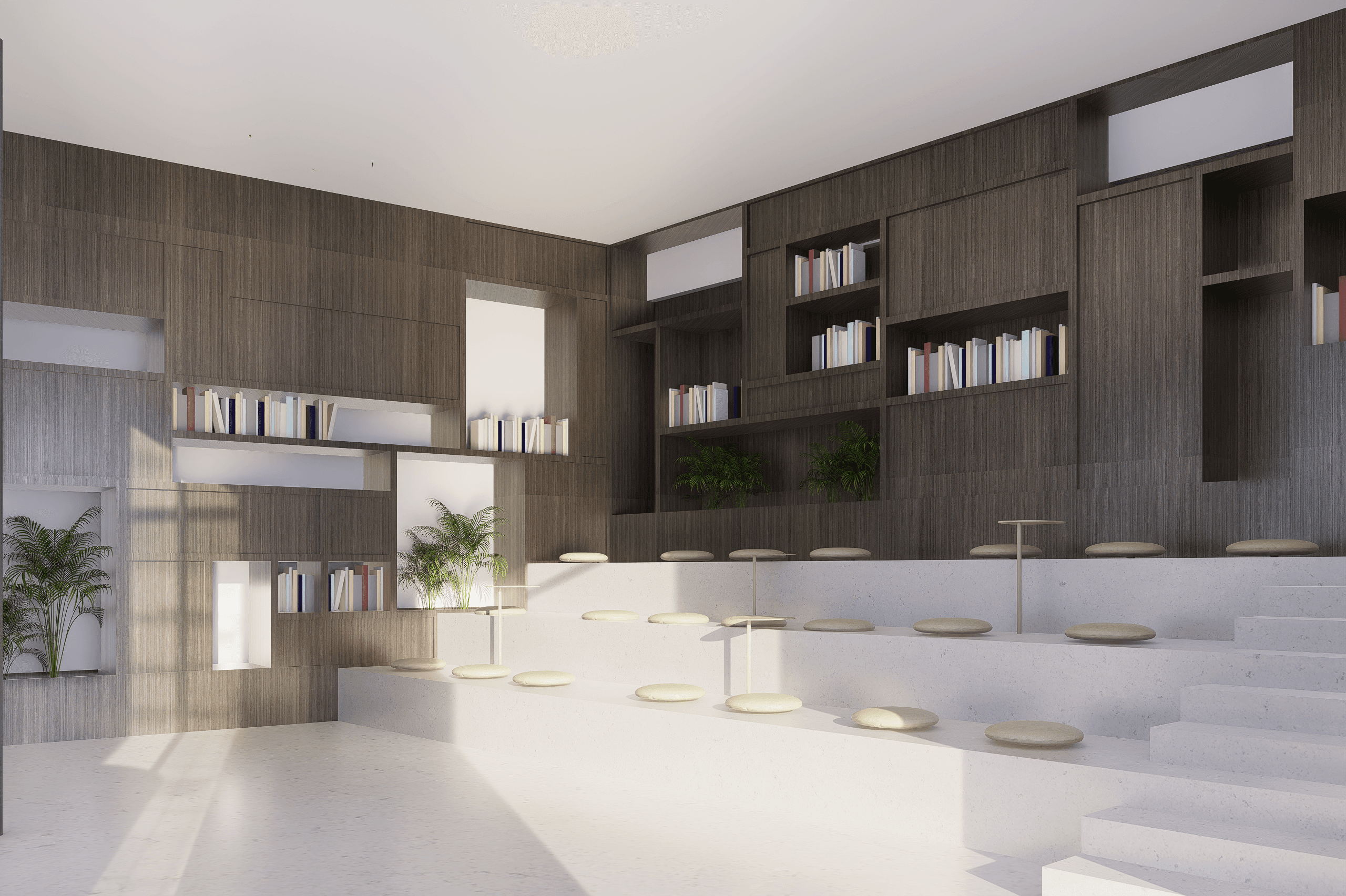
The concept begins with the landscape itself, where carefully composed topography and natural materials suck as rocky stones and native plantings lay the groundwork for the architectural language. This terrain doesn’t stop at the threshold of the building, it spills in-ward, flowing seamlessly into the museum’s main space. Stones, textures, and vegetation patterns are carried through into the interior, blurring line between exterior and interior and immersing visitors in a tactile, grounded experience from the moment of arrival.
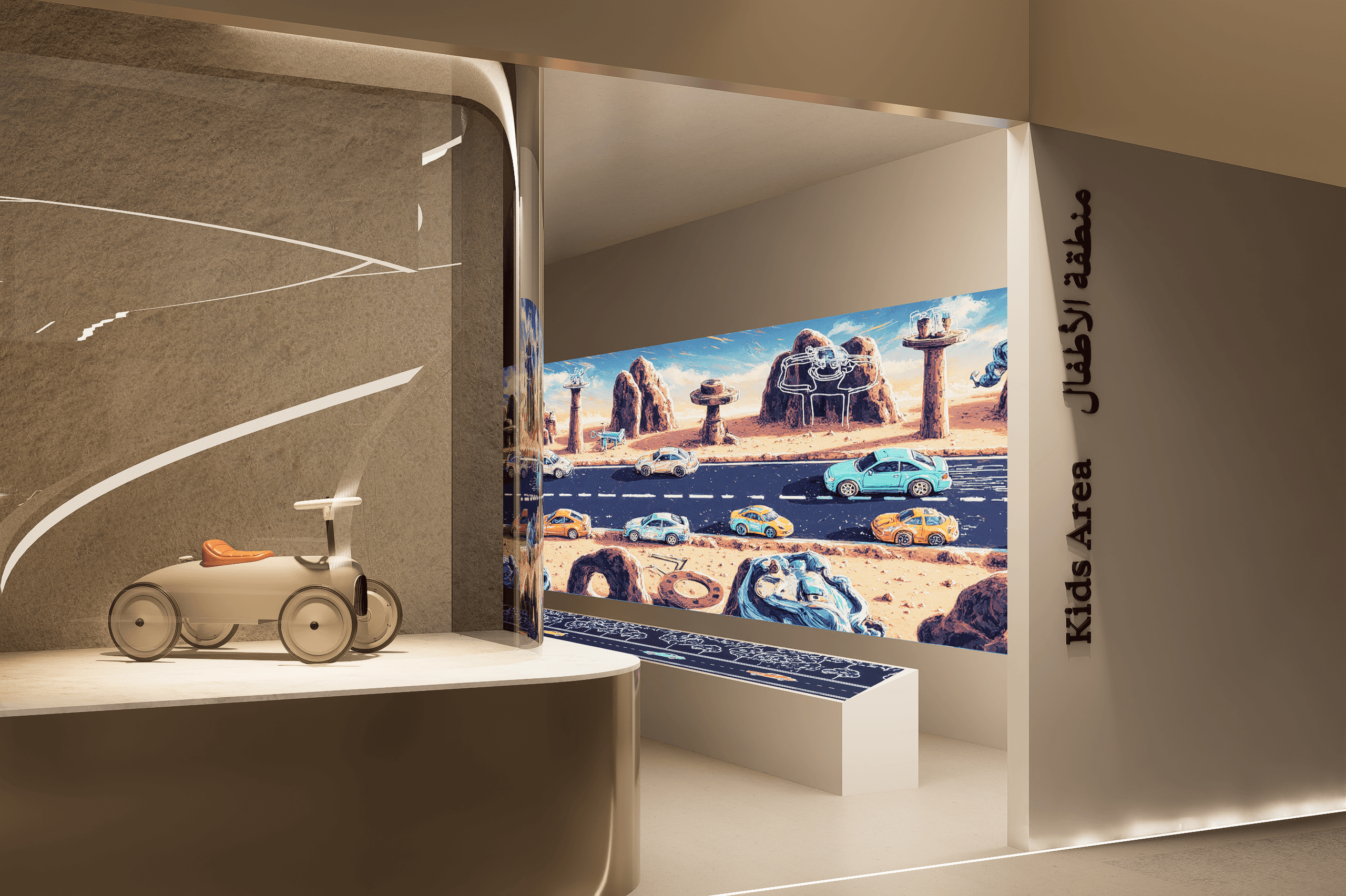
The design reflects the rocky stone landscape through a duality between old and new, nature and technology using rough textures, sleek materials and immersive experience.
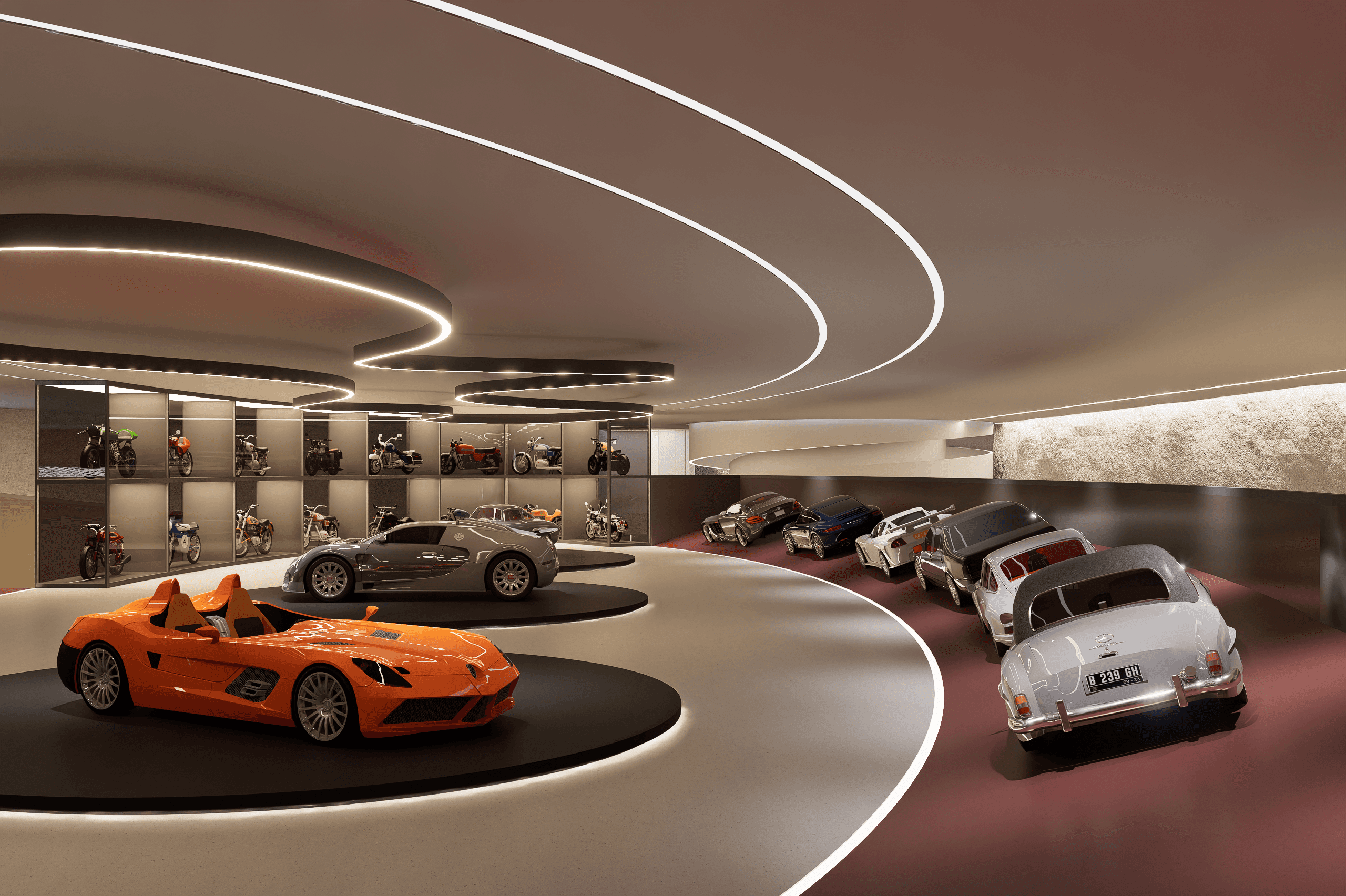
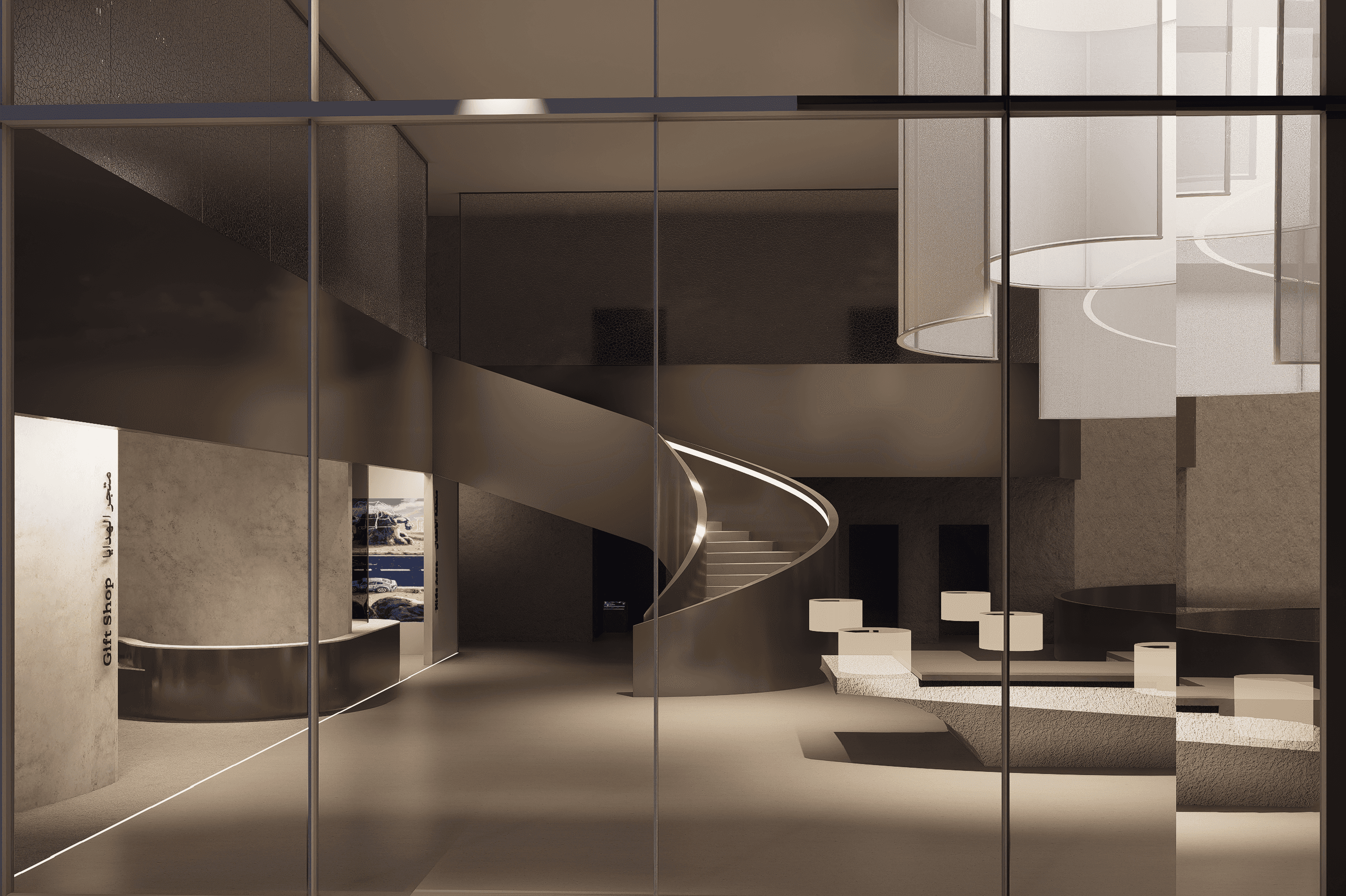
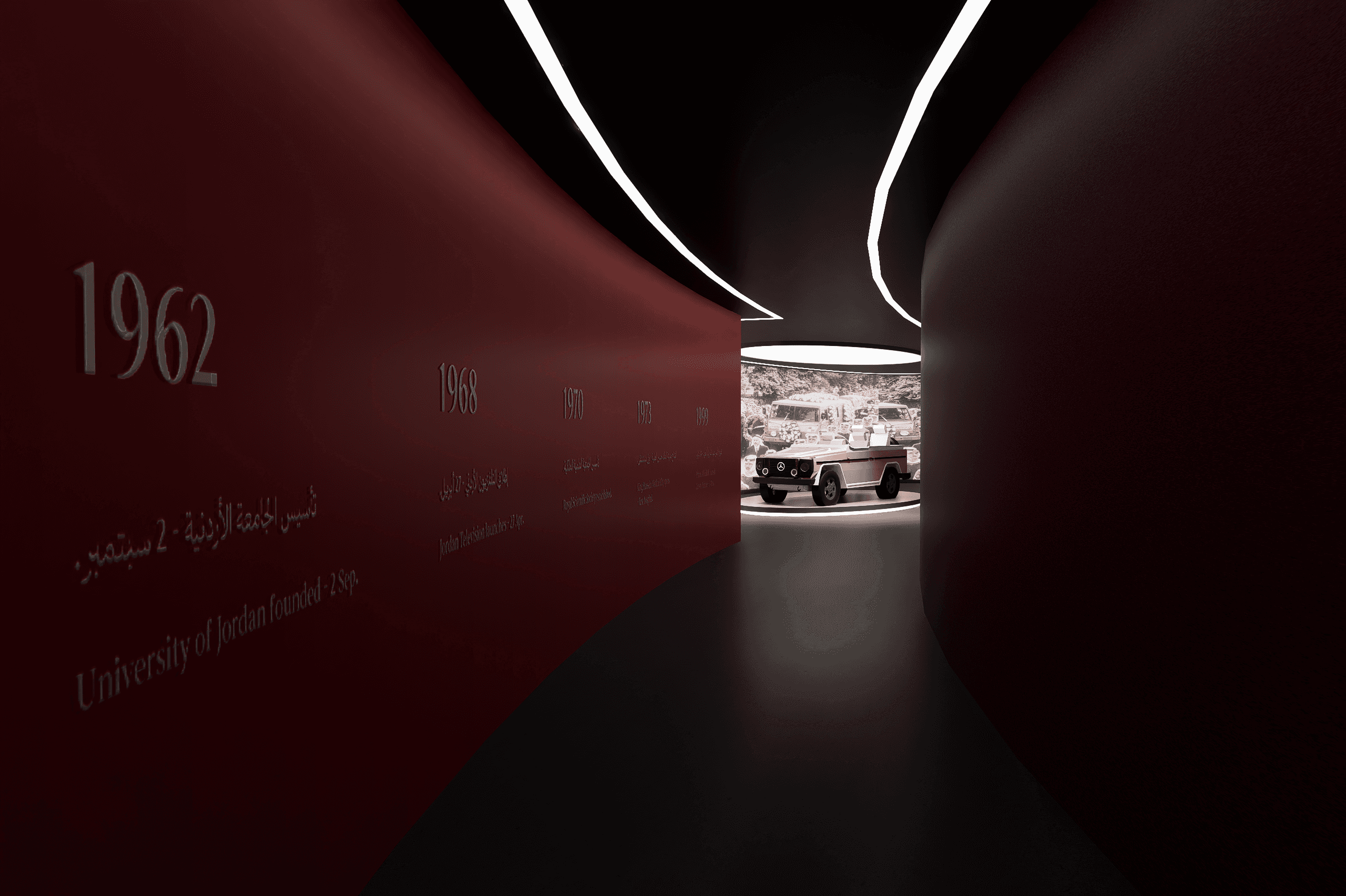
The Design of the museum is guided by both earth and memory, by the terrain beneath the wheels, and by the legacy of a king whose love for cars helped shape Jordan’s automotive culture. The building is not merely a container of vehicles; it is a vessel for stories, speed, legacy, and land.
At its core, the museum was a royal gift from His Majesty King Abdullah II to his beloved father, the late King Hussein, a passionate car lover, and the godfather of rally racing and speed tests in Jordan. This emotional foundation drives the narrative architecture of the project, which seeks to reflect the Kings personal story and national significance.
In designing the Jordanian Royal Automobile Museum, we drew inspiration from BMW Welt’s architectural language, particularly its approach to circulation and spatial flow. The dynamic use of ramps and seamless transitions between levels in BMW Welt informed our concept of movement as key design narrative.
Rather than treating circulation as purely functional element, we saw it as an opportunity to shape as a visitor’s journey, mirroring the fluidity and innovation associated with automotive design. The ramps in our project act as both connective tissue and experiential devices, allowing for gradual spatial reveals and multi-level engagement with exhibits. This approach inspired by BMW Welt, helped us craft a museum experience where movement itself becomes part of the evolution of Jordan’s automotive legacy.
Another key source of inspiration for the museum was the Mercedes-Benz Museum by UN Studio. Its dynamic circulation and strong spatial storytelling particularly informed our approach, especially the way the Stuttgart museum embeds movement into the architectural language, allowing visitors to experience the car collection as a continuous unfolding narrative.
In our project, this idea translates into a fluid layout that guides visitors through the evolution of Jordan’s automotive history. The spatial sequence is conceived as a journey rather than a rigid exhibition path, creating an immersive and progressive visitor experience.
The design of the car museum is deeply rooted in the natural environment; the landscape and terrain are embraced not merely as a backdrop but as an intrinsic medium of architectural expression. The terrain being the cars’ original playground, becomes a conceptual foundation for the buildings form and surface language.
The concept begins with the landscape itself, where carefully composed topography and natural materials suck as rocky stones and native plantings lay the groundwork for the architectural language. This terrain doesn’t stop at the threshold of the building, it spills in-ward, flowing seamlessly into the museum’s main space. Stones, textures, and vegetation patterns are carried through into the interior, blurring line between exterior and interior and immersing visitors in a tactile, grounded experience from the moment of arrival.
The design reflects the rocky stone landscape through a duality between old and new, nature and technology using rough textures, sleek materials and immersive experience.
(Other works)