KING HUSSEIN CANCER CENTER
Scope
Interior Design, Facade Uplifting, Outdoor Planning
Year
2025
Type
Health Care
Size
2,500 m²
Status
Design
Location
Amman, Jordan
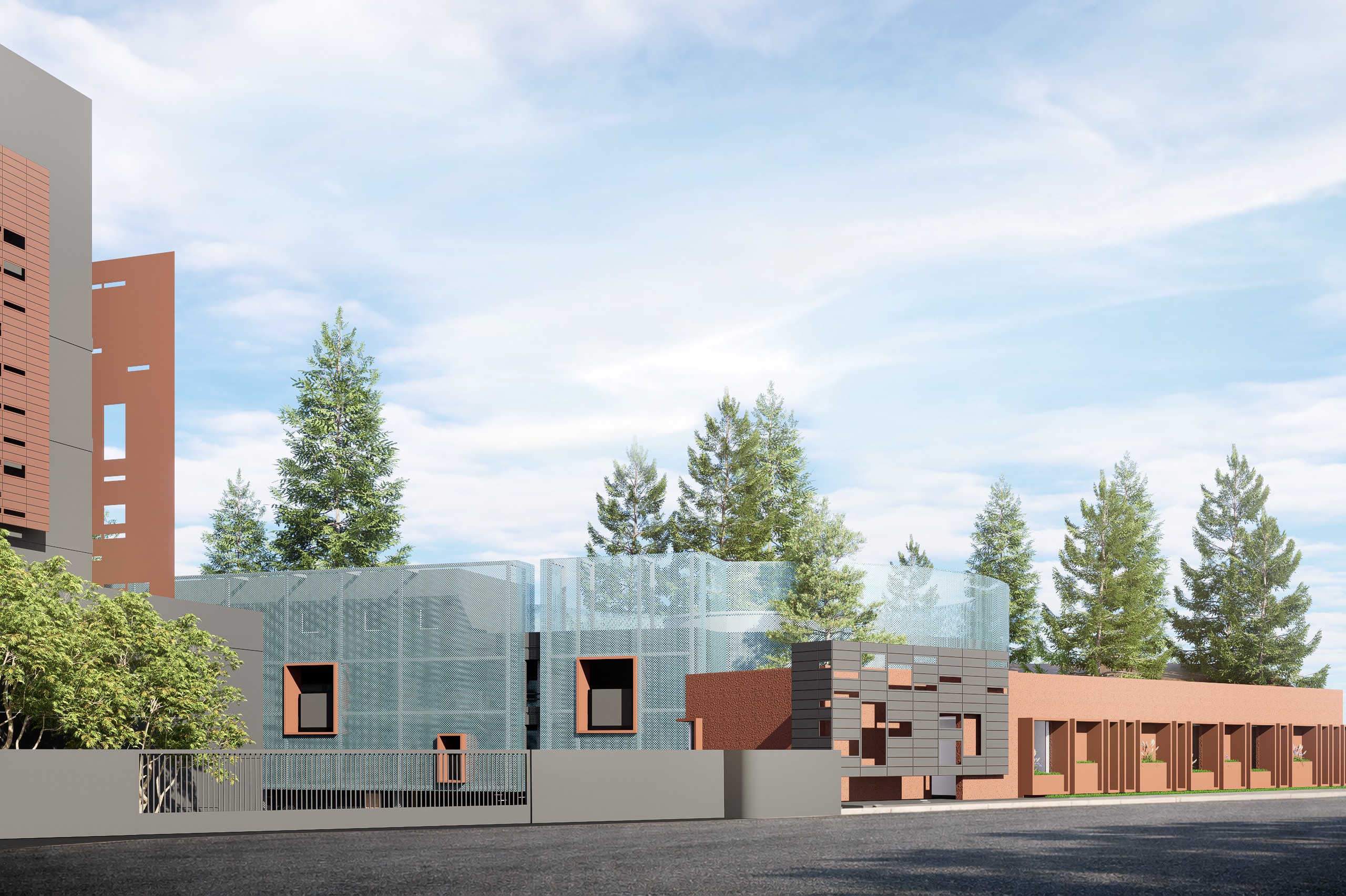
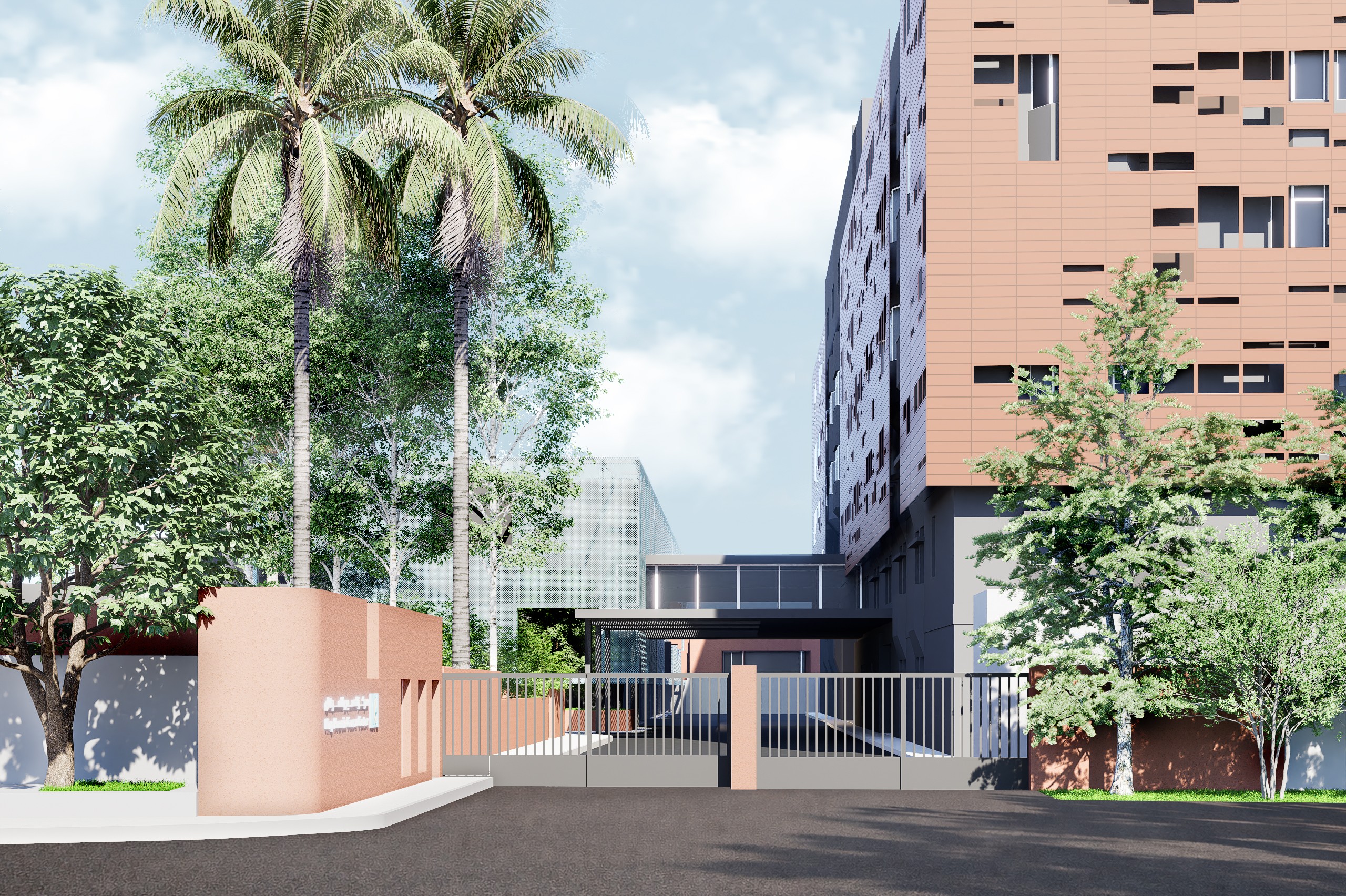
The King Hussein Cancer Center project focused primarily on exterior transformation, including façade uplifting and outdoor planning across a 2,500 m² area, with a subtle extension into the interior design.
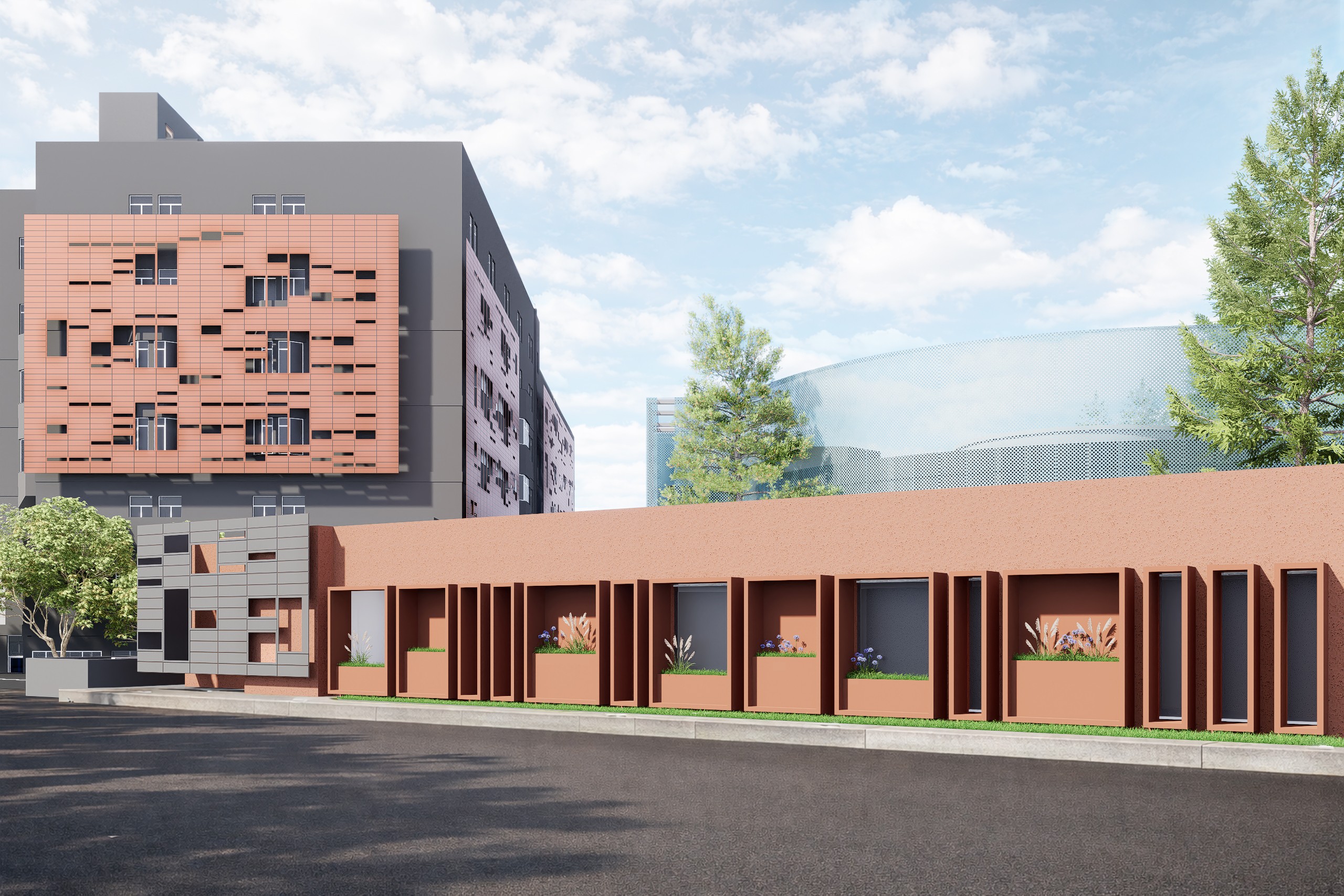
The composition is defined by a warm, earthy palette—primarily terracotta tones—that softens the institutional character typically associated with healthcare facilities. The perforated façade panels create a dynamic rhythm across the elevation, balancing solidity and openness while allowing controlled natural light into the interior spaces. This layered approach adds depth and visual interest, breaking down the scale of the building into more human-centered proportions.
At the street level, the boundary wall is thoughtfully articulated with recessed niches and integrated planters, creating a more engaging and approachable edge. These green pockets introduce a subtle connection to nature, enhancing the therapeutic quality of the outdoor environment for patients and visitors alike. The interplay of vertical and horizontal elements along the wall also reinforces a sense of movement and continuity along the pedestrian experience.
While the primary impact is external, the façade design indirectly enriches the interior by filtering daylight and creating a softer, more comfortable indoor atmosphere. Overall, the design establishes a cohesive dialogue between architecture and landscape, transforming the center into a space that feels dignified, contemporary, and emotionally supportive
The King Hussein Cancer Center project focused primarily on exterior transformation, including façade uplifting and outdoor planning across a 2,500 m² area, with a subtle extension into the interior design.
The composition is defined by a warm, earthy palette—primarily terracotta tones—that softens the institutional character typically associated with healthcare facilities. The perforated façade panels create a dynamic rhythm across the elevation, balancing solidity and openness while allowing controlled natural light into the interior spaces. This layered approach adds depth and visual interest, breaking down the scale of the building into more human-centered proportions.
At the street level, the boundary wall is thoughtfully articulated with recessed niches and integrated planters, creating a more engaging and approachable edge. These green pockets introduce a subtle connection to nature, enhancing the therapeutic quality of the outdoor environment for patients and visitors alike. The interplay of vertical and horizontal elements along the wall also reinforces a sense of movement and continuity along the pedestrian experience.
While the primary impact is external, the façade design indirectly enriches the interior by filtering daylight and creating a softer, more comfortable indoor atmosphere. Overall, the design establishes a cohesive dialogue between architecture and landscape, transforming the center into a space that feels dignified, contemporary, and emotionally supportive
(Other works)